Impact of Ethanol Concentration in Disinfectant Formulations
Correct ethanol concentration for effective disinfectants. How to maintain chemical stability during dilution processes starting from ENA 96% with water.
What ethanol concentration should your disinfectant formulation carry, and can you prove that number on every batch you release? For procurement, production and quality teams, the decision is not only about the label claim; it is about whether a dilution step, a storage tank or an in-use bottle can shift the concentration out of the effective window without anyone noticing. This article explains how ethanol concentration governs antimicrobial performance, why dilution from ENA 96% is less straightforward than a simple ratio, and which controls keep a formulation stable between the mixing vessel and the point of use. It is written for readers who have to sign off a specification, a batch record or a supplier qualification. Where figures are given, they are typical ranges or values taken from published standards, not promises about any single product.
Which ethanol concentration actually disinfects?
Ethanol works because it is both a solvent and a protein denaturant, but it does not work alone. Water is needed to hydrate the microbial cell and to carry ethanol across the cell wall and membrane; once inside, ethanol disrupts membrane lipids and denatures cytoplasmic proteins. This is why efficacy is not a straight line that rises with concentration. Formulations typically perform best in the range of about 60% to 80% v/v, and 70% v/v is the value most often used in surface and hand disinfectant formulation work.
Why is 96% ethanol not automatically a better disinfectant?
Above roughly 85% to 90% v/v, ethanol can coagulate proteins at the outer surface of the cell faster than it penetrates. The result is a protective crust that slows diffusion, so the contact time required for a target log reduction increases rather than decreases. Very high concentrations also evaporate quickly from a sprayed surface, so the wet contact time that a test method assumes may not exist in practice. A formulation that is out of specification on the high side can therefore fail a suspension test while containing more ethanol than a passing product.
Where does ethanol alone stop being sufficient?
Ethanol is reliable against many vegetative bacteria and against enveloped viruses, but it is not a sporicide and is weaker against non-enveloped viruses and against biofilm. Claims must be matched to the organism and the test method. Bactericidal claims in food, industrial and medical areas are commonly supported by suspension tests such as EN 1276, which requires a defined log reduction under a stated contact time, temperature and interfering substance. Virucidal and sporicidal claims require their own methods and their own contact times. Concentration is a necessary input to those claims, not a substitute for them.
How does dilution from ENA 96% change more than the titer?
Ethanol and water do not mix additively. The volume of the mixture is slightly smaller than the sum of the two volumes, and the deviation grows with ethanol content, so a batch built from 70 litres of ENA 96% plus 30 litres of water will not automatically assay at 70% v/v. The difference is small in absolute terms but large enough to matter when a label claim has a narrow tolerance. The practical answer is to batch by mass using density tables for ethanol-water mixtures at a controlled temperature, and to confirm the result analytically rather than by arithmetic.
Dilution also changes everything else that was in the concentrate. The buffering capacity of the water, its hardness, its microbial load and its dissolved gases all enter the finished product. Purified or deionised water is the normal choice for a regulated formulation, and dilution water should be covered by its own specification and monitoring. Mixing energy and order of addition matter as well: adding ethanol to water with agitation avoids local overheating and improves homogeneity before sampling.

What does the starting ethanol specification lock in?
Your dilution model is only as good as the assay of the incoming alcohol. Agro Kimya supplies ENA 96% with an assay of up to 96.2% in specification, denatured ethyl alcohol at a minimum of 96%, and technical ethyl alcohol at up to 95%. These three grades behave differently in a formulation: the denaturant has to be declared, has to be compatible with the surfactant or acid system, and must not interfere with the assay method. Higher-purity grades beyond ENA 96% are outside our scope, so a specification that calls for a higher monograph grade should be routed to a different supply chain rather than adapted from this one.
For buyers, the grade decision is usually driven by the end use. A product for food-contact surfaces needs a raw material whose impurities and denaturant profile are acceptable for that use, and the food additive specifications named in the references below are the relevant benchmarks. An industrial or institutional product has more room, but the denaturant still has to be documented and still has to be stable over shelf life. Because the corn stream is verified per lot with documentation for non-GMO status, traceability can be closed at the raw material stage rather than reconstructed later.
Which parameters belong in the batch record?
The table below lists the parameters that typically decide whether a diluted ethanol formulation is released or held. Targets are typical values or standard requirements; the actual limits belong in your own specification.
| Parameter | Typical target or limit | How it is verified |
|---|---|---|
| Ethanol assay, v/v at 20 °C | Label claim plus or minus the declared tolerance, often within the 60% to 80% v/v working window | Gas chromatography or density measurement, following the ethanol monograph method in the applicable pharmacopoeia |
| Water content and water quality | Purified or deionised water; hardness and conductivity within the site specification | Conductivity, hardness titration, bioburden and endotoxin testing where relevant |
| pH of the finished concentrate or ready-to-use | Typical range 4 to 8 depending on the acid or alkaline system chosen | Calibrated pH meter at the declared dilution and temperature |
| Denaturant identity and level | As declared on the technical data sheet and label | Supplier certificate of analysis plus in-house chromatographic confirmation |
| Bactericidal performance | Log reduction and contact time required by the chosen standard, for example EN 1276 | Suspension test at the declared concentration, contact time, temperature and interfering substance |
| Appearance and homogeneity | Clear, free of sediment and phase separation | Visual inspection of top, middle and bottom samples after mixing |
How do you keep a diluted formulation chemically stable?
Once water has been added, the product becomes more sensitive to its container and its environment. Ethanol is volatile, and in a partly filled container it leaves the liquid phase faster than water does, so the bulk assay drifts downward over repeated opening and closing. The same effect makes an in-use spray bottle unreliable after several refills. Hygroscopic plastic containers can admit moisture from humid air and dilute the product from the other direction. Light, trace metals and elevated temperature accelerate esterification and acetal formation in the presence of aldehydes, which shows up as an odour change before it shows up in the assay.
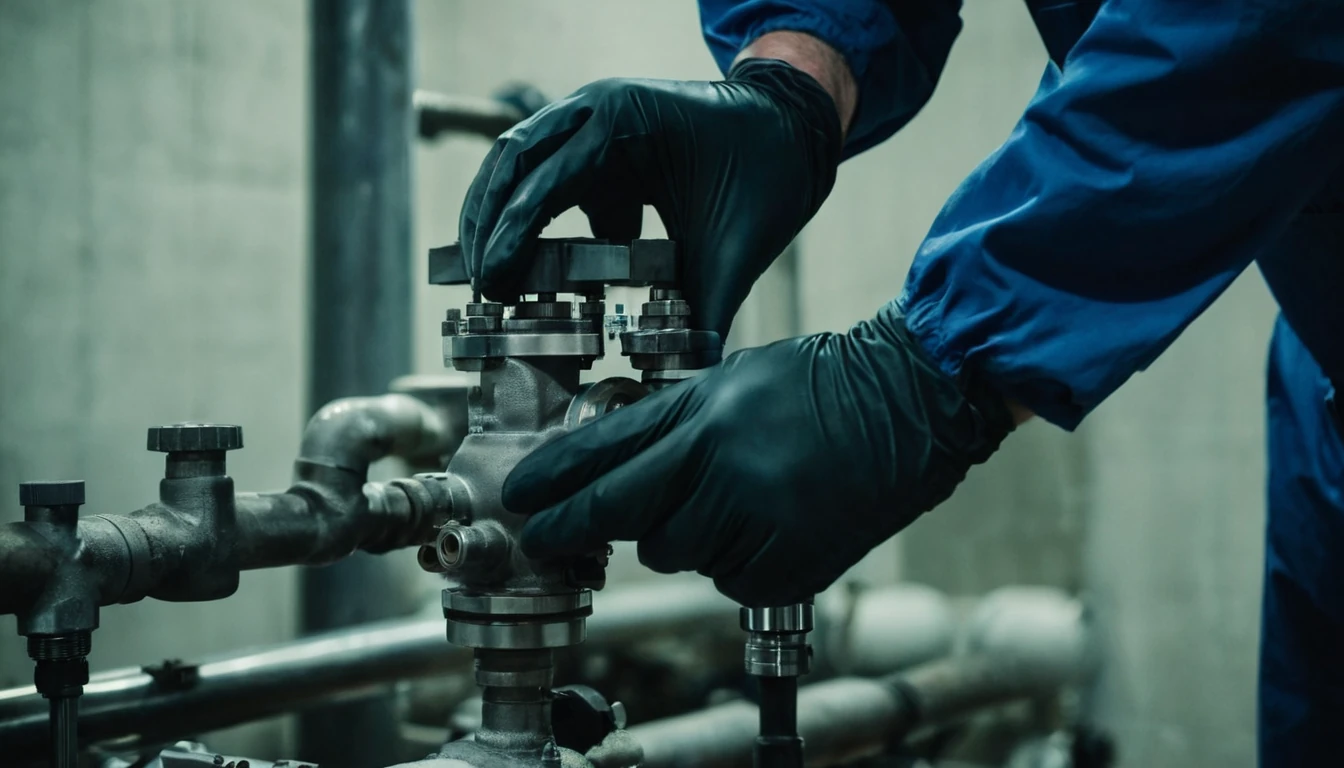
Stainless steel tanks, closed IBCs and bulk tankers reduce these losses because they limit headspace exchange and are easy to clean. Storage temperature should be controlled and documented; a cool, shaded warehouse is not the same as a summer loading bay. Shelf life is normally supported by stability studies that combine real-time and accelerated conditions, with assay, pH and appearance at defined intervals. A drift within the label tolerance over the declared shelf life is the acceptance criterion, and many sites set an internal alert at 1% to 2% v/v absolute so that investigation starts before a batch fails.
Where does microbial failure come from when the assay passes?
A correct assay does not guarantee a correct product. Contamination can enter with the dilution water, with a poorly cleaned dosing line, or with the cloth and bucket used at the point of use. Biofilm inside tubing protects organisms from ethanol and then releases them intermittently. Application failures are equally common: a surface that is visibly soiled consumes ethanol before it reaches the microorganism, a spray that is wiped immediately removes the product before the contact time has elapsed, and a formulation applied at 50% v/v because someone topped up a bottle with water will not deliver the tested claim. Reasonable worst-case use should be described in the product literature so that the concentration on the label corresponds to the concentration in use.
Do you dilute at the plant or at the point of use?
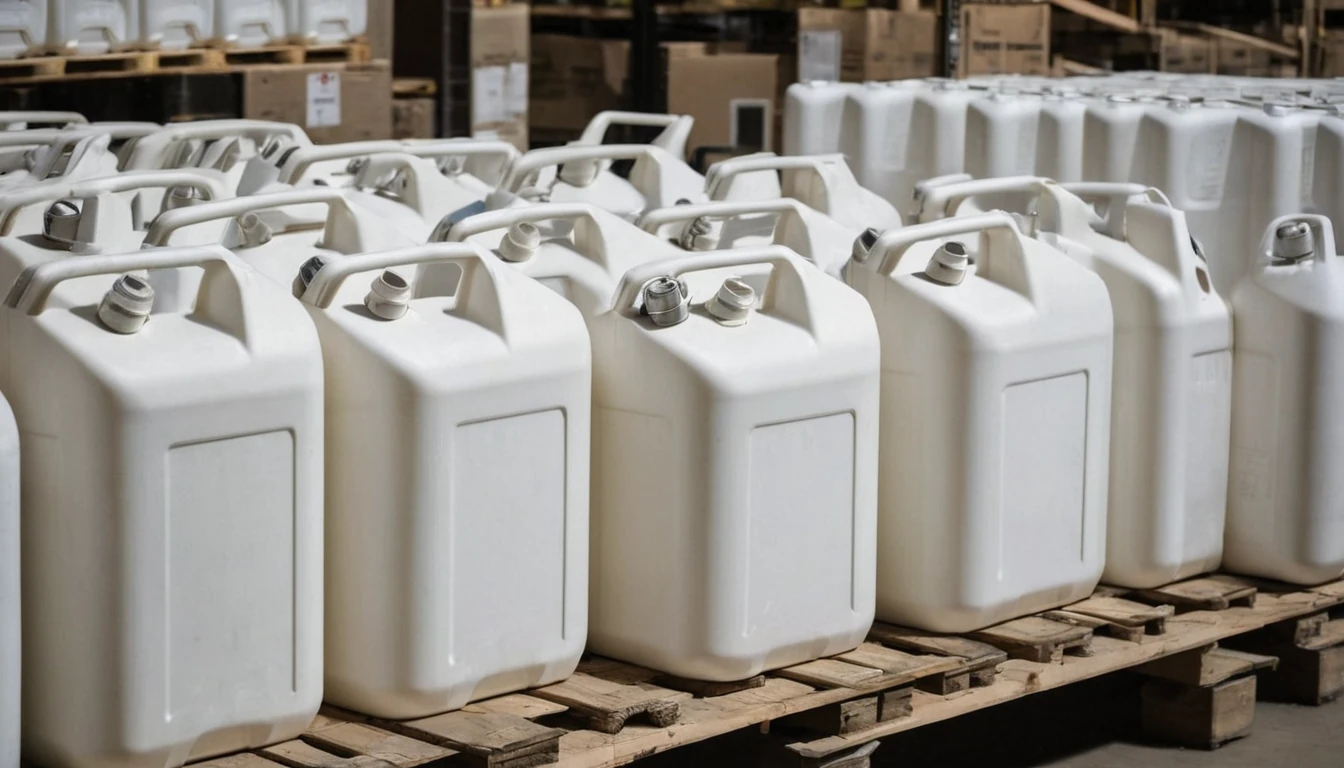
Concentrates reduce freight and packaging, but they move the dilution risk to the customer. Ready-to-use products remove that risk but multiply the volume shipped. Whichever model is chosen, the concentration step has to be validated: an inline dilution system needs flowmeter calibration, a mixing study and a sampling plan that covers the start, middle and end of the transfer. Bulk tanker deliveries should be sampled after transfer rather than from the receiving tank, and a retained sample from each batch should be stored under the same conditions as the commercial stock.
How do you scale up without shifting the concentration?
Scale-up failures usually come from three places: temperature, mixing and sampling. A large batch mixed from cold raw material will read differently at 20 °C than at 10 °C, so the assay must be referenced to a stated temperature or reported with a correction. A tank with a slow agitator can stratify, especially in the minutes between the end of mixing and the sampling point. Sampling from a single top port is the most common error; a bottom sample, a mid-height sample and a top sample should agree before release. Agro Kimya's production technology uses eight-column distillation and stainless steel storage to keep the alcohol consistent at the point of delivery, and the sustainability approach includes a condensate polishing unit that recovers up to 80% of process water and a biomass-fired combined heat and power unit that supplies steam and electricity to the plant.
Decision checklist before you release a batch
- Confirm that the target concentration is inside the tested range for the intended claim and contact time, not simply the highest value in the specification.
- Calculate the dilution by mass with density data at a stated temperature; do not assume additive volumes.
- Check that the incoming grade, ENA 96%, denatured or technical, matches the end use and that the denaturant is declared and compatible.
- Verify dilution water quality and record the water source on the batch record.
- Sample top, middle and bottom after mixing and confirm homogeneity before filling.
- Test assay by gas chromatography or density against the applicable monograph method, and retain a sample for the shelf life period.
- Document storage conditions from filling to dispatch, including container type, headspace and temperature.
- Provide in-use instructions that state the concentration as delivered and the contact time required by the claim.
Getting the ethanol concentration right in a disinfectant formulation is a chain of decisions rather than a single number: the grade you buy, the way you dilute it, the vessel you store it in and the way the customer uses it. Each link can be specified, measured and audited. Teams that want to close the raw material end of that chain can review the ENA 96% product page and raise application-specific questions through the contact page.
References and standards
- Ph. Eur. Ethanol (96 per cent) Monograph, European Pharmacopoeia: reference for assay and density methods applicable to the concentration range supplied as ENA 96%.
- USP Ethanol Monograph, United States Pharmacopeia: comparison point for ethanol identification and assay practice in pharmacopoeial testing.
- FCC Ethanol Monograph, Food Chemicals Codex: benchmark for food-grade ethanol specifications where the end use requires it.
- Türk Gıda Kodeksi Gıda Katkı Maddeleri Yönetmeliği, E 1510 etanol: Turkish food additive framework applicable to ethanol used in food-related applications.
- Commission Regulation (EU) No 231/2012, E 1510 specifications: purity criteria for ethanol as a food additive in the European market.
- Regulation (EC) No 1907/2006 (REACH): registration and safety information obligations that apply to ethanol placed on the EU market.
Need ENA 96% specs or pricing?
Our sales and technical team can share COA, specification sheets and export documentation.
Who prepared this article?
This content was prepared by the Agro Kimya technical team working across production, quality and export operations. Contact our team directly for product specifications, process details and supply conditions.
Editorial policy: Blog articles are prepared by the Agro Kimya technical team; product and process information reflects our plant operations. Certificates and laboratory results are shared only with current documents.