Ethanol as Raw Material in Pharmacy: Pharma Grade and GMP Supply
Ethanol purity requirements in pharmaceutical manufacturing. The critical importance of supply chain transparency within Good Manufacturing Practices (GMP).
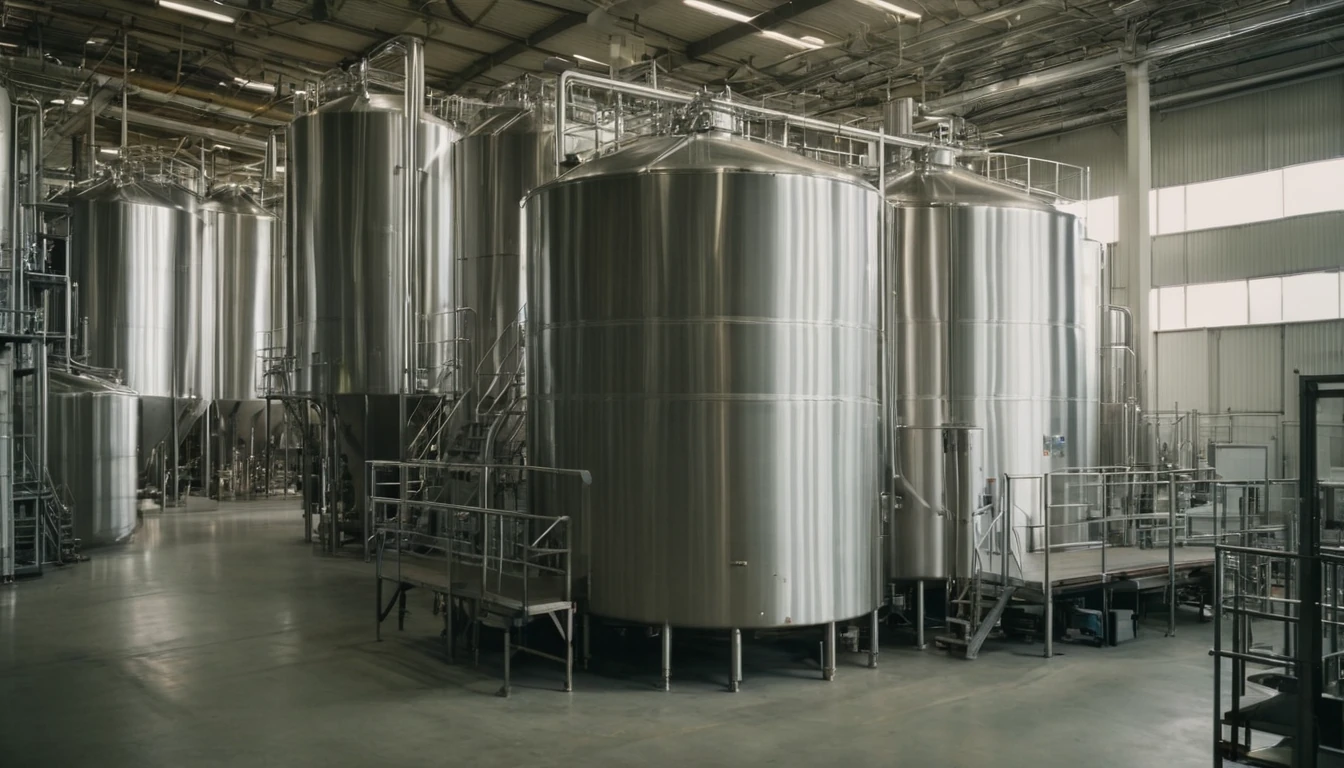
If you are qualifying a solvent supplier for a pharmaceutical process, the question is rarely whether the ethanol is pure enough on paper. It is whether the material, the documentation and the plant behind it can survive an audit and stay consistent for years. Pharma grade ethanol is defined by a pharmacopoeial monograph, but GMP compliance is defined by how the supplier controls the process, the packaging and the records. This article separates those two layers, explains how impurities enter and where they are removed, and closes with a sourcing checklist you can send to a supplier. It also states plainly where Agro Kimya's ENA 96% fits into that picture, and where it does not.
What Does Pharma Grade Ethanol Actually Mean in a Specification?
A "grade" is not a marketing word; in pharmacy it is a set of tests with acceptance criteria. The European Pharmacopoeia, the United States Pharmacopeia and the Food Chemicals Codex each publish ethanol monographs that define identity, assay, water content and limits on volatile impurities. When a buyer says pharma grade ethanol, what they normally mean is a material that has been tested against one of these monographs and released against a specification derived from it.
Two documents are often confused at this point. The certificate of analysis reports the results of testing on a specific lot. The quality system behind it explains how the lot was made, how deviations were handled, how changes are notified and how the next lot will be controlled. A monograph tells you what the material must be. It does not tell you how the supplier prevents the next batch from drifting. That gap is where GMP compliance is either demonstrated or lost.
For a procurement or quality team, the practical consequence is that the specification is the entry ticket, not the decision. The decision rests on whether the supplier can show documented, repeatable control of the process from raw material reception to the tanker discharge point.
Why Is Purity Alone a Weak Proxy for GMP Compliance?
A batch can pass every monograph test while the process that produced it is poorly controlled. This happens more often than is comfortable: an assay result near the middle of the range hides a distillation column that was run at a different reflux ratio, a fermentation that ran warmer than usual, or a raw material lot with a different profile. The test is a snapshot. GMP is the system that makes the snapshot reproducible.
Three mechanisms explain most batch-to-batch variation in ethanol. The first is the fermentation substrate: the composition of the corn, its moisture and its microbial load shift the by-product spectrum slightly from lot to lot. The second is the distillation cut: small changes in where the heads and tails are taken off move the concentration of acetaldehyde, esters and higher alcohols. The third is the contact surface after distillation: storage tanks, transfer lines, hoses, gaskets and tanker compartments can all reintroduce contamination that the column removed.
An auditor therefore looks for evidence that these three mechanisms are controlled, not just monitored. Change control on process parameters, deviation records with root cause, cleaning validation for tanks and tankers, and lot-level traceability from corn intake to dispatch are the working documents of GMP compliance. A supplier that cannot produce them is asking you to accept the snapshot without the system.
Which Limits Separate Pharmacopoeial Ethanol from Technical Alcohol?
The table below summarises the parameters that matter most when comparing a pharmacopoeial grade with a technical grade. The values are typical monograph limits given for orientation; the applicable edition of the monograph and the customer's own specification always govern.
| Parameter | Typical limit (per monograph) | Method or reference |
|---|---|---|
| Ethanol content | 94.9 to 96.9 % v/v, depending on the monograph | Ph. Eur. Ethanol (96 per cent); USP Ethanol |
| Water content | 4.0 to 6.0 % v/v for the 96% grade | Karl Fischer titration, per monograph |
| Methanol | typically not more than 200 ppm | Gas chromatography, per Ph. Eur. and USP |
| Acetaldehyde | typically not more than 10 ppm | Gas chromatography, per monograph |
| Higher alcohols (fusel) | typically not more than 0.01 % | Gas chromatography, per monograph |
| Residue on evaporation | typically not more than 25 ppm | Gravimetry, per monograph |
| Benzene | typically not more than 2 ppm | Gas chromatography, ICH Q3C class 1 limit |
| Relative density | typically 0.805 to 0.812 | Ph. Eur. Ethanol (96 per cent) monograph |
The pattern is consistent: technical grades are specified mainly on ethanol content and appearance, while pharmacopoeial grades add limits on the trace volatiles that a distillation column can remove but a lax cut point will let through. Methanol is the clearest example, because it is toxic, it originates in the raw material, and it is separated only if the distillation is designed and operated to separate it.
How Do Impurities Enter, and Where Are They Removed?
Fermentation By-Products and the Distillation Cut
During fermentation, yeast produces ethanol alongside acetaldehyde, acetic acid, higher alcohols, esters and small amounts of methanol released from pectin in the grain. These compounds have different boiling points and different relative volatilities against ethanol, which is exactly what makes distillation effective. In a column train, the light ends concentrate in the heads and the heavy ends in the tails. The operator's job is to place the product cut where the required impurities are lowest, and to hold it there.
This is why the number of columns and the stability of the operating window matter more than the nominal purity on a data sheet. A single column can reach a high ethanol content but struggles to remove both light and heavy ends at once. A multi-column train, such as the eight-column distillation at our plant, allows separate removal of different impurity groups and gives the operator room to hold the cut steady. When reflux ratio drifts, when a column floods, or when feed composition changes sharply, the cut moves and impurities carry over. The mechanism of failure is not a bad test; it is an unstable column.
The water content is set by the same physics. Ethanol and water form an azeotrope, so simple distillation cannot go beyond roughly 95 % by weight under atmospheric conditions. This is why 96 % v/v grades are standard in this segment, and why concentrations above that require a different dehydration step. More on that in the scope section below.
Denaturants, Storage and Cross-Contamination
Denatured alcohol contains an added denaturant by design. That makes it suitable for applications where the denaturant is permitted, and unsuitable for pharmaceutical uses where the formulation cannot tolerate it. Denaturants are chosen to be hard to remove, so the contamination is not reversible by the customer. A buyer must therefore confirm at the order stage which grade is being shipped and how it is segregated from other streams.
Storage is the quieter risk. Ethanol is hygroscopic and picks up water from humid air, so tank breathing through a wet vent will slowly dilute a lot. Stainless steel tanks and dedicated lines reduce both corrosion products and residue carryover. Bulk tankers add a third variable: the previous cargo. A tanker that last carried a solvent or a food oil can transfer odour and trace residues if cleaning validation is not documented. Packaging choice is therefore a quality decision, not a logistics detail. Agro Kimya supplies ENA 96%, denatured and technical grades in stainless steel tanks, IBCs and bulk tankers, and the packaging route should be named in the specification.
What Does Supply Chain Transparency Look Like in Practice?
Transparency means the buyer can follow a lot backwards and forwards without negotiating for each data point. Backwards, to the corn intake and the fermentation batch. Forwards, to the storage tank, the packaging and the dispatch date. In between sit the process records: distillation parameters, cleaning records, deviation reports and release decisions.
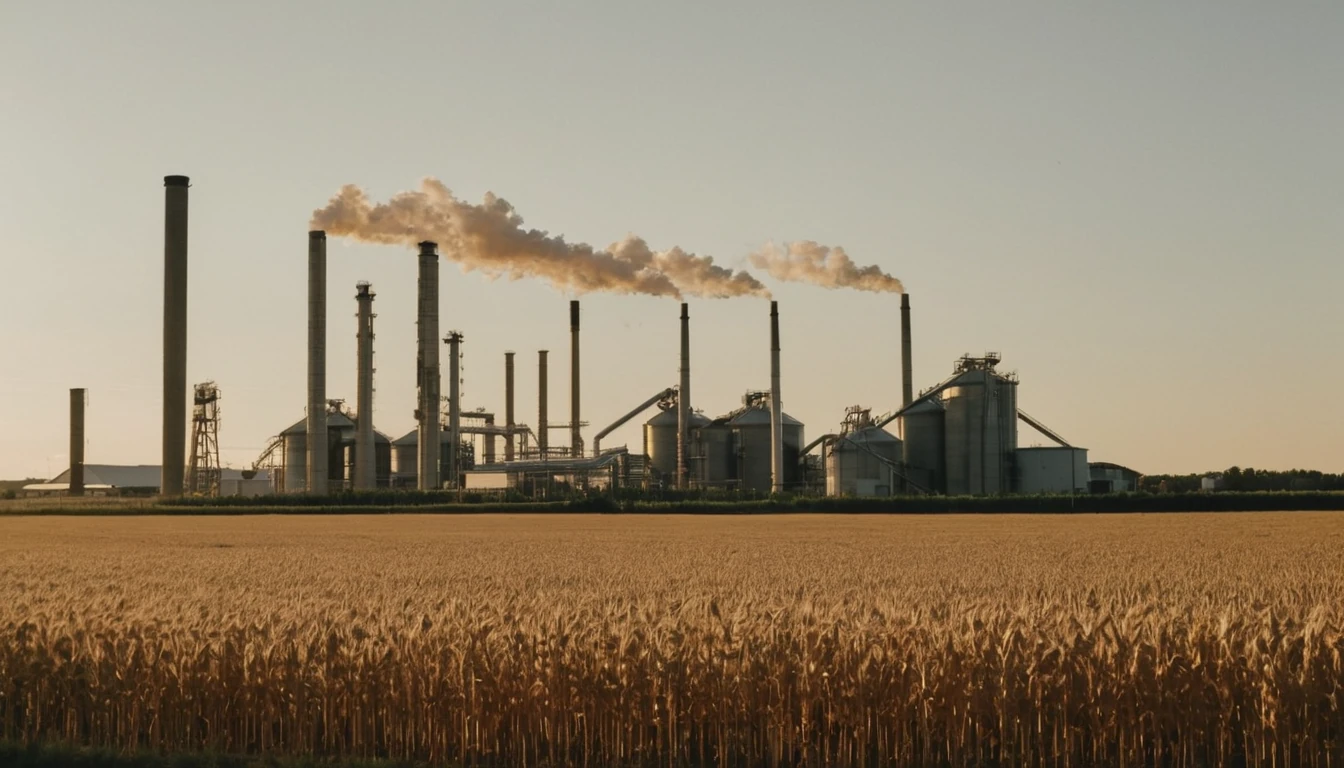
An integrated plant makes this easier to document because the streams are physically connected. At our Kozan facility, corn is received, ground and slurried before enzymatic saccharification and fermentation. Carbon dioxide is recovered from fermentation and sold as food-grade liquid CO2 up to 99.9 %, while the stillage is processed by decantation, evaporation and drying into corn DDGS, and distilled corn oil is recovered separately. A condensate polishing unit recovers up to 80 % of process water, and a biomass-fired combined heat and power unit supplies steam and electricity. These are process facts a buyer can ask about, because each of them creates a potential cross-contact route that must be controlled.
The raw material side matters too. Our corn is sourced from Türkiye, and the non-GMO corn stream is verified per lot with documentation. For a pharmaceutical buyer, that per-lot verification is the useful part: it is an example of the record-level traceability that a supplier qualification exercise is designed to test. Further detail is available on our sustainability approach.
Where Does ENA 96% Sit Relative to Pharma Grade Ethanol Specifications?
Agro Kimya's product scope is ENA 96% (up to 96.2 % in specification), denatured ethyl alcohol (minimum 96 %) and technical ethyl alcohol (up to 95 %). We do not produce higher-purity grades beyond ENA 96%. Any grade that requires tighter impurity limits, additional purification steps or a different dehydration stage is outside our scope and we do not describe a unit we do not operate.
This is not a limitation to be glossed over; it is a specification position the buyer must evaluate. A 96 % v/v grade is a recognised pharmacopoeial article, and the Ph. Eur. monograph for ethanol (96 per cent) exists precisely because this concentration is widely used. Whether a given lot meets a given monograph is established by testing against that monograph and by the supplier's documented control of the process. The full product specification is published on the ENA 96% product page, and the process behind it is described under our production technology.
For a pharmaceutical application, the honest question is therefore not "is this pharma grade ethanol" but "does this specification, tested against the monograph my dossier references, meet my acceptance criteria, and can the supplier prove control". If the answer requires a grade above 96 %, that requirement should be directed to a supplier whose scope includes it.
How Should You Qualify an Ethanol Supplier?
Qualification works best when it follows the material. Start with the specification and the monograph, then move to the process, then to the plant, then to the packaging route. A sample tested in your own laboratory confirms the lot in front of you; only the audit and the change control agreement tell you about the lots to come.
Two practical points are often missed. First, ask for the deviation history of the previous twelve months, not just the certificate of analysis. A supplier with no deviations may simply have no system for recording them. Second, agree in writing what constitutes a change: a new corn source, a new denaturant, a new tanker cleaning agent or a modified distillation cut point all deserve notification before shipment, not after.
Which Points Belong on the Final Sourcing Checklist?
- Named monograph and edition, with the customer's acceptance criteria written into the specification, not implied by the grade name.
- Ethanol content and water content ranges stated explicitly, including the test method used for each.
- Impurity limits for methanol, acetaldehyde, higher alcohols, residue on evaporation and benzene, with the analytical method referenced.
- Confirmation that the grade shipped is ENA 96%, denatured or technical, and that denatured material is not substituted for the pharmaceutical stream.
- Packaging route defined: stainless steel tank, IBC or bulk tanker, with cleaning validation and previous cargo policy for tankers.
- Lot traceability from corn intake through fermentation, distillation and storage to dispatch.
- Non-GMO verification per lot, with the documentation format agreed in advance.
- Change notification clause covering raw material source, process parameters, denaturant and packaging.
- Deviation and complaint handling process, with named contacts and response times.
- A documented statement of which grades are within the supplier's scope, so that out-of-scope requests are routed early to our contact page.
Read together, these points turn a grade name into a decision. Pharma grade ethanol is a specification; GMP compliance is the evidence that the specification will be met again next month. Buyers who separate the two, and ask for documented proof of the second, get a supply relationship that holds up in an audit rather than only in a quotation.
References and standards
- Ph. Eur. Ethanol (96 per cent) Monograph, European Pharmacopoeia: the reference monograph for the concentration range that matches 96 % v/v grades.
- USP Ethanol Monograph, United States Pharmacopeia: the parallel monograph used in United States pharmacopoeial dossiers, with its own assay and impurity limits.
- FCC Ethanol Monograph, Food Chemicals Codex: relevant when the same material is evaluated against food chemical criteria.
- Commission Regulation (EU) No 231/2012, E 1510 specifications: defines the purity criteria for ethanol used as a food additive in the European Union.
- Regulation (EC) No 1333/2008 on food additives: the framework regulation that governs the use of E 1510 ethanol in food applications.
- Regulation (EC) No 1907/2006 (REACH): the registration and safety information framework that applies to ethanol placed on the EU market.
Need ENA 96% specs or pricing?
Our sales and technical team can share COA, specification sheets and export documentation.
Who prepared this article?
This content was prepared by the Agro Kimya technical team working across production, quality and export operations. Contact our team directly for product specifications, process details and supply conditions.
Editorial policy: Blog articles are prepared by the Agro Kimya technical team; product and process information reflects our plant operations. Certificates and laboratory results are shared only with current documents.