Ethanol Selection for Cosmetics: Why Choose ENA 96%?
The role of ethanol in perfumes and cosmetics. Discussing the importance of purity levels that prevent skin irritation and low allergen potential in ENA.
Which ethanol grade should a formulator specify for a perfume, a toner or a wet wipe, and what evidence should sit behind that choice? Most procurement discussions start and finish with concentration, yet the parameters that decide skin tolerance, odour neutrality and batch consistency are the impurity profile, the water fraction, and the way the material was distilled and stored. ENA 96% is the grade Agro Kimya produces for these applications, with a specification that reaches up to 96.2% ethanol and a distillation and storage chain built around contaminant control. This article explains the mechanisms behind those parameters and sets out a qualification route you can apply to any supplier, including us.
What defines a cosmetic ethanol beyond the percentage on the certificate?
Two suppliers can both quote "96%" and ship materials that behave very differently in a fragrance or a toner. "Cosmetic grade" is not a single legal category; it is a specification agreed between buyer and seller, usually anchored to a pharmacopoeial or food-additive monograph and then tightened where the application demands it. Ethanol content, water fraction, methanol, aldehydes, higher alcohols, acidity, non-volatile residue and odour are separate decisions, each with a different effect on the finished formula.
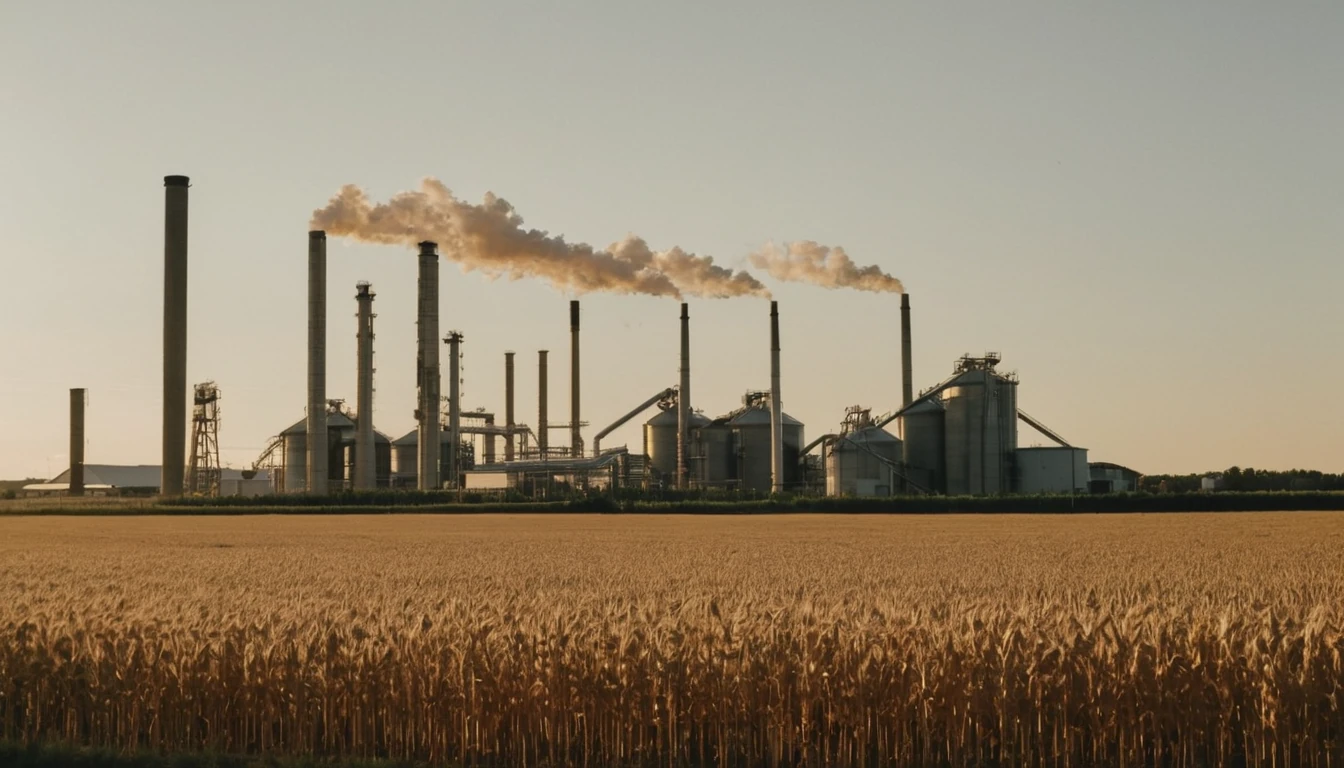
Agro Kimya produces ENA 96% at an integrated corn dry-mill plant in the Kozan Organized Industrial Zone in Adana, Türkiye. The specification reaches up to 96.2% ethanol, the material is distilled in an eight-column train and held in stainless steel before packaging. Grade details are on the ENA 96% product page. What matters for selection is why each parameter is controlled, which the sections below address.
How does ethanol act on skin, and where does purity enter the mechanism?
Ethanol is a small amphiphilic molecule. It penetrates the stratum corneum, intercalates between the ordered lipid lamellae and, at sufficient concentration, extracts part of that lipid fraction and denatures keratin. The sensory result is cooling followed by a sting, and on a compromised barrier (after shaving, exfoliation or in damaged skin) the same dose produces more erythema than it would on intact skin. Ethanol also acts as a penetration enhancer: it raises the flux of other dissolved substances across the barrier, which is useful for an active and unhelpful for an irritant that should have stayed on the surface.
That is a dose and contact-time effect, and no supplier can remove it. What a supplier controls is the impurity load carried on top of it: aldehydes that react with skin proteins, acids that shift the pH of the surface film, and higher alcohols that add both odour and irritation. A cleaner ethanol does not make a formula non-irritant, but it removes avoidable contributors to the total response.
Why rinse-off, leave-on and wipe formats need different specifications
A hand gel is rinsed away within seconds. A perfume, toner or deodorant stays on the skin for hours, sometimes under occlusion or in sunlight. Wet wipes sit in a sealed pack with the formula for months and then deliver it repeatedly to the skin. The longer the contact and the more sensitive the site, the more weight shifts onto impurity limits and odour neutrality rather than ethanol content alone. The same ENA 96% can serve all three formats, but the acceptance criteria in your purchase specification should not be identical.
Which impurities actually drive irritation and allergen potential?
Allergen potential in an ethanol-based cosmetic is rarely about the ethanol molecule and almost always about what travels with it. The relevant groups behave as follows.
- Acetaldehyde and other aldehydes. Carbonyl groups react with lysine and other amino residues on skin proteins, and the resulting adducts can be recognised by the immune system as haptens. That is the mechanistic route from a simple impurity to contact sensitisation. Aldehydes also oxidise to their acids and pull the pH of the surface film downward over shelf life.
- Methanol. Controlled for toxicological rather than sensory reasons, and limited by every compendial monograph used for this grade.
- Higher alcohols (fusel oils such as propanol, butanol and isoamyl alcohol). The classic source of a sharp, solvent-like note that survives fragrance masking, and modest skin irritants when present above a well-cut distillation residue.
- Esters and sulfur-containing compounds. Present at parts per million, dominant in odour, and the usual reason a batch fails a sensory panel while the chromatogram looks acceptable.
- Acidity and non-volatile residue. Acidity accelerates esterification and pH drift; residue points to carry-over of still bottoms or storage contamination.
Because these are distillation-controlled rather than reaction-controlled, the place to fix them is the column train, not the quality laboratory.
| Parameter | Typical specification approach | Reference method or benchmark |
|---|---|---|
| Ethanol content, % v/v | 95.0 to 96.2 according to specification (ENA 96%) | Ph. Eur. or USP Ethanol Monograph; GC or density |
| Water | Balance, typically 4 to 5% v/v | Karl Fischer titration |
| Methanol | Within monograph limit, quantified per lot | Gas chromatography |
| Aldehydes (as acetaldehyde) | Low ppm limit agreed in the purchase specification | Gas chromatography, often with derivatisation |
| Higher alcohols (fusel oils) | Set by distillation cut, limit agreed with the buyer | Gas chromatography |
| Acidity | Within monograph limit, expressed as acetic acid | Titration |
| Non-volatile residue | Within monograph limit | Evaporation and gravimetry |
| Odour | Clean and characteristic, no foreign note | Trained sensory panel at use dilution |
ENA 96%, denatured alcohol or technical alcohol: which grade belongs in a cosmetic?
Agro Kimya produces three grades and they are not interchangeable. ENA 96% is the undenatured grade, specified up to 96.2%, intended for applications where the ethanol itself is part of the product. Denatured ethyl alcohol (min 96%) carries a denaturant that changes taste, odour and sometimes skin compatibility: denatured grades are designed to make the alcohol unfit for drinking, not to make it suitable for skin contact.
Technical ethyl alcohol (up to 95%) is specified for industrial uses where cosmetic sensory and toxicological criteria do not apply. Selecting it to save cost transfers the risk to your stability and safety assessment, because the impurity profile a cosmetic specification is written to control is exactly what a technical grade does not guarantee.
Grades above ENA 96% are outside our scope. We do not produce them and do not offer them as an option. For most cosmetic formats the ethanol is formulated into a system that already contains water, so a 96% grade with a controlled impurity profile covers the requirement. Raising concentration beyond 96% needs a separation step aimed at water, not at the aldehydes and fusel alcohols that govern odour and sensitisation potential.
Why do eight distillation columns and stainless steel storage change the odour profile?
Fermentation produces ethanol together with a spectrum of congeners: acetaldehyde, ethyl acetate, methanol, higher alcohols and trace sulfur compounds from the corn mash. A column train separates these by boiling point and relative volatility. Light ends leave overhead early, fusel alcohols are drawn as a side stream from the rectifying section, and the ethanol heart cut is withdrawn where composition is stable. The number of theoretical stages determines how sharp those cuts can be. A single-column still leaves a broader heart cut carrying more congeners; an eight-column train allows each fraction to be trimmed separately, which is how the aldehyde and fusel alcohol figures in a specification are actually achieved.
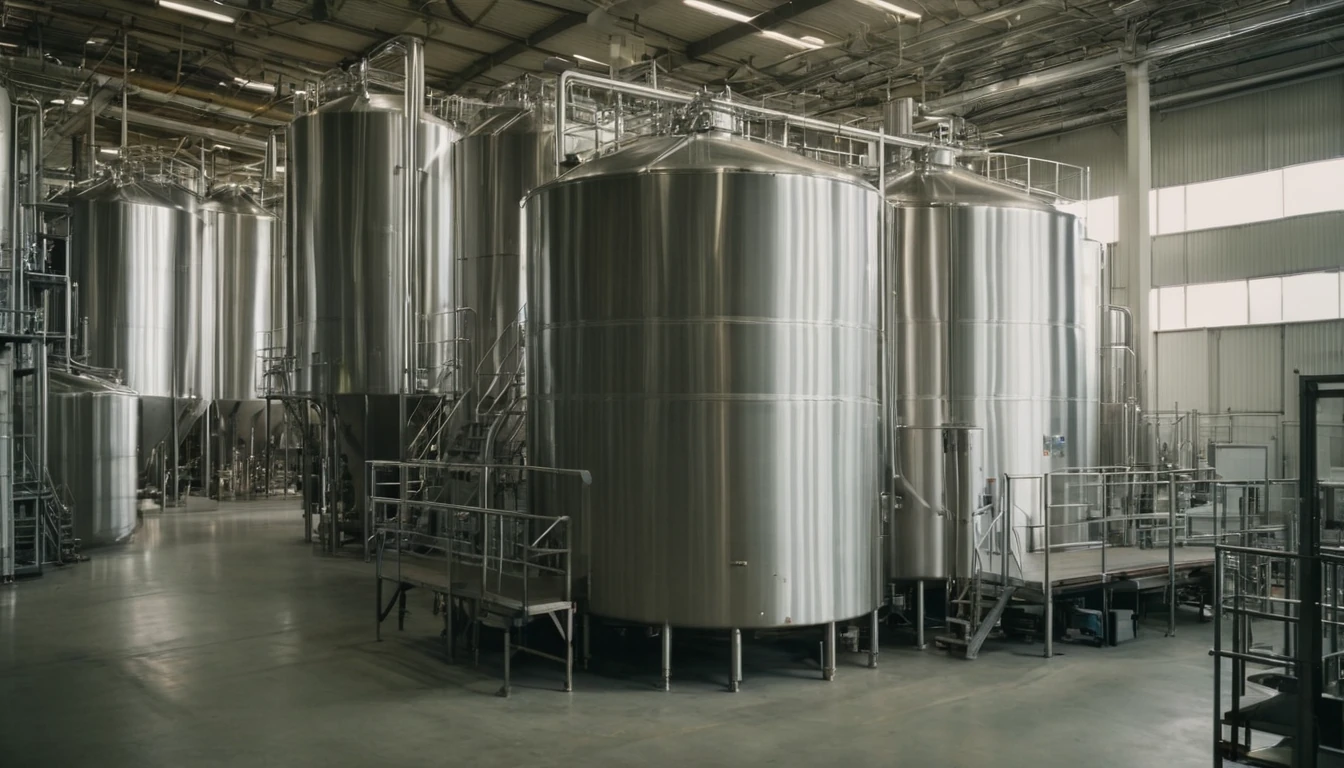
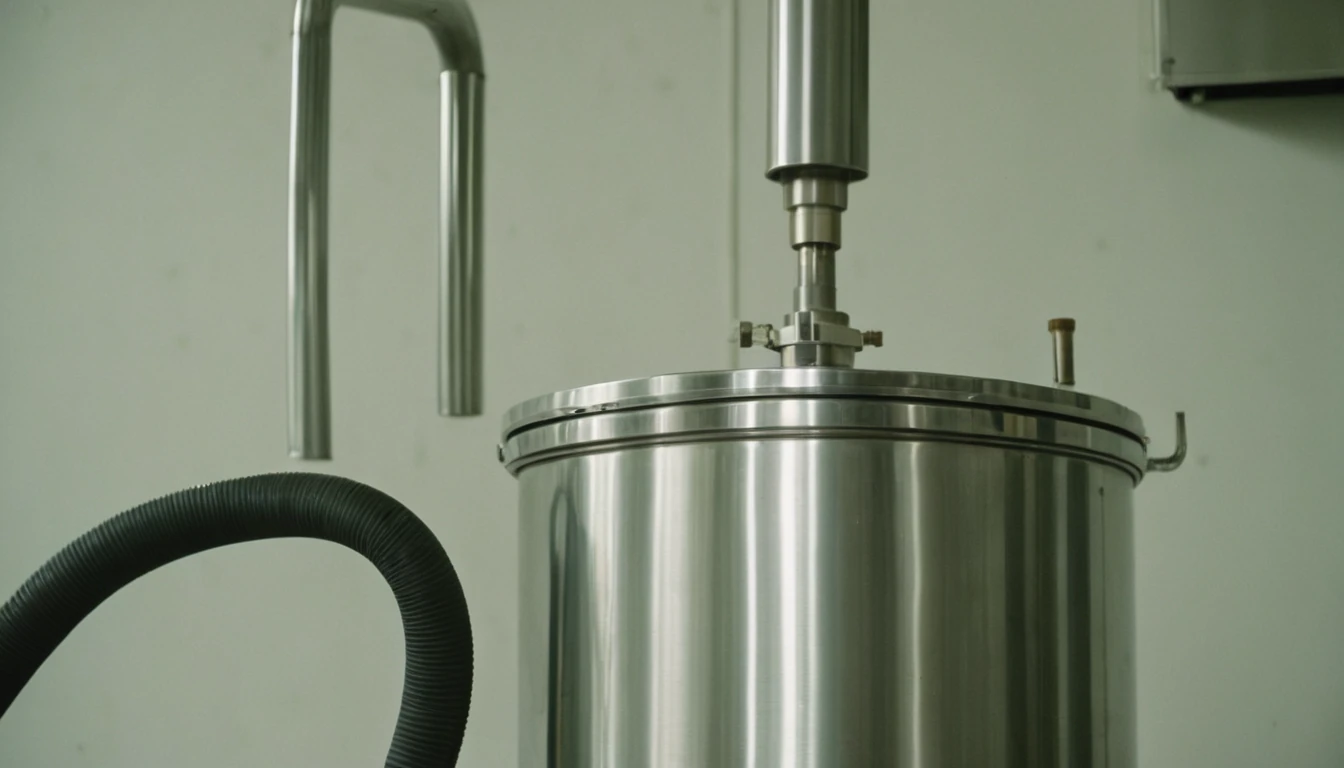
Storage is the second half of the mechanism. Ethanol is a solvent for organic residues and will pick up odour from gaskets, coatings and material left in a poorly cleaned vessel. Carbon steel introduces iron ions that catalyse oxidation of ethanol to acetaldehyde and can generate colour bodies over time. Stainless steel storage and transfer lines, dedicated to the grade and cleaned under a defined procedure, preserve the distillation result until the tanker or IBC is filled. That is why packaging (stainless steel tanks, IBCs and bulk tankers) belongs in the specification rather than in logistics. The process is described further on the production technology page.
How do you qualify a cosmetic ethanol supplier without over-speccing?
Qualification should follow the risk. Start with the formula, not the certificate: identify contact time, application site, whether ethanol will carry actives into the skin, and whether the product carries a non-GMO or origin claim. Translate that into a written specification with limits, methods and a sampling plan, then hold every supplier to the same document so that a second source is genuinely comparable.
Documents and samples to request before the first order
- A certificate of analysis for the actual lot, not a typical value sheet, with the analytical method named for every parameter.
- A representative sample for your own sensory panel, diluted at the concentration used in your formula, because odour defects invisible in a chromatogram are obvious on a smelling strip.
- Lot-level non-GMO documentation if a marketing claim depends on it. Agro Kimya sources corn from Türkiye and verifies the non-GMO stream per lot with documentation.
- A safety data sheet consistent with Regulation (EC) No 1907/2006 (REACH), checked against your own hazard communication requirements.
- Packaging and compatibility information: IBC material, gasket type, tanker unloading requirements.
- A change control commitment covering process, raw material and specification changes.
Then run an accelerated compatibility trial: your formula with the candidate ethanol, stored at elevated temperature in the intended pack, checked for pH drift, colour, odour and phase separation. This catches the interactions a certificate cannot. If you need the data behind a specific parameter, the contact page reaches the team that owns the specification.
What do water recovery, biomass energy and by-product valorisation mean for the buyer?
For a purchasing team these are continuity arguments rather than marketing ones. A corn dry mill sells several products from one feedstock stream, which spreads the corn cost and keeps the ethanol line running when a single by-product market softens. Agro Kimya recovers CO2 from fermentation, produces corn DDGS by decantation, evaporation and drying, and recovers distilled corn oil separately.
On utilities, a biomass-fired combined heat and power plant supplies steam and electricity to the process, and a condensate polishing unit recovers up to 80% of process water. That matters when energy and water prices move, and it matters to cosmetic customers whose scope 3 reporting now asks about the upstream footprint of raw materials. The detail sits on the sustainability page. Supply geography is the third continuity factor: Türkiye, Europe and the Middle East are served from the Adana site, with stainless steel tanks, IBCs and bulk tankers as packaging routes.
Is ENA 96% the right cosmetic ethanol for your formulation?
For most perfumes, toners, deodorants and wipes the answer turns on whether the impurity profile and the sensory result fit your formula, not on whether the concentration is the highest available. Cosmetic ethanol is a specification, and ENA 96% is built to be specified: a 96% grade with a specification up to 96.2%, an eight-column distillation train, stainless steel storage, lot-verified non-GMO corn, and packaging that protects the material to the point of use.
Use this checklist before committing a purchase order.
- Define contact time and skin site, then set aldehyde, fusel alcohol and odour limits for that use rather than copying another product's specification.
- Request a lot-specific certificate of analysis with named methods, and confirm the range includes your required ethanol content (up to 96.2% for ENA 96%).
- Assess odour at use concentration on a smelling strip, then repeat after accelerated storage in your own pack.
- Confirm the grade: undenatured ENA 96% for skin contact, denatured only where the denaturant is acceptable in the formula, technical never as a silent substitute.
- Verify non-GMO lot documentation and a REACH-consistent safety data sheet before the first delivery.
- Agree packaging and unloading (stainless steel tank, IBC or bulk tanker) with cleaning and compatibility details.
- Put a second source and a change notification clause in place before you scale.
If any point needs a technical answer rather than a quotation, the contact page is the shortest route to the production and quality team behind the ENA 96% specification.
References and standards
- Ph. Eur. Ethanol (96 per cent) Monograph, European Pharmacopoeia: the closest compendial benchmark for a 96% grade, covering content and the main impurity limits.
- USP Ethanol Monograph, United States Pharmacopeia: a second compendial reference frequently named by export customers when writing specifications.
- FCC Ethanol Monograph, Food Chemicals Codex: useful where the same ethanol may be used in oral care or other ingestible-adjacent applications.
- Commission Regulation (EU) No 231/2012, E 1510 specifications: defines the additive specifications that overlap with cosmetic uses in the EU.
- Türk Gıda Kodeksi Gıda Katkı Maddeleri Yönetmeliği, E 1510 etanol: the Turkish alignment domestic customers reference for the same additive identity.
- Regulation (EC) No 1907/2006 (REACH): governs safety data sheets and supply chain communication for the material.
Need ENA 96% specs or pricing?
Our sales and technical team can share COA, specification sheets and export documentation.
Who prepared this article?
This content was prepared by the Agro Kimya technical team working across production, quality and export operations. Contact our team directly for product specifications, process details and supply conditions.
Editorial policy: Blog articles are prepared by the Agro Kimya technical team; product and process information reflects our plant operations. Certificates and laboratory results are shared only with current documents.