Environmental Footprint of Corn-Based Ethanol and Sustainable Supply
Resource efficiency in the production of corn-based ethyl alcohol. Agricultural approaches that minimize environmental impact and supplier responsibility.
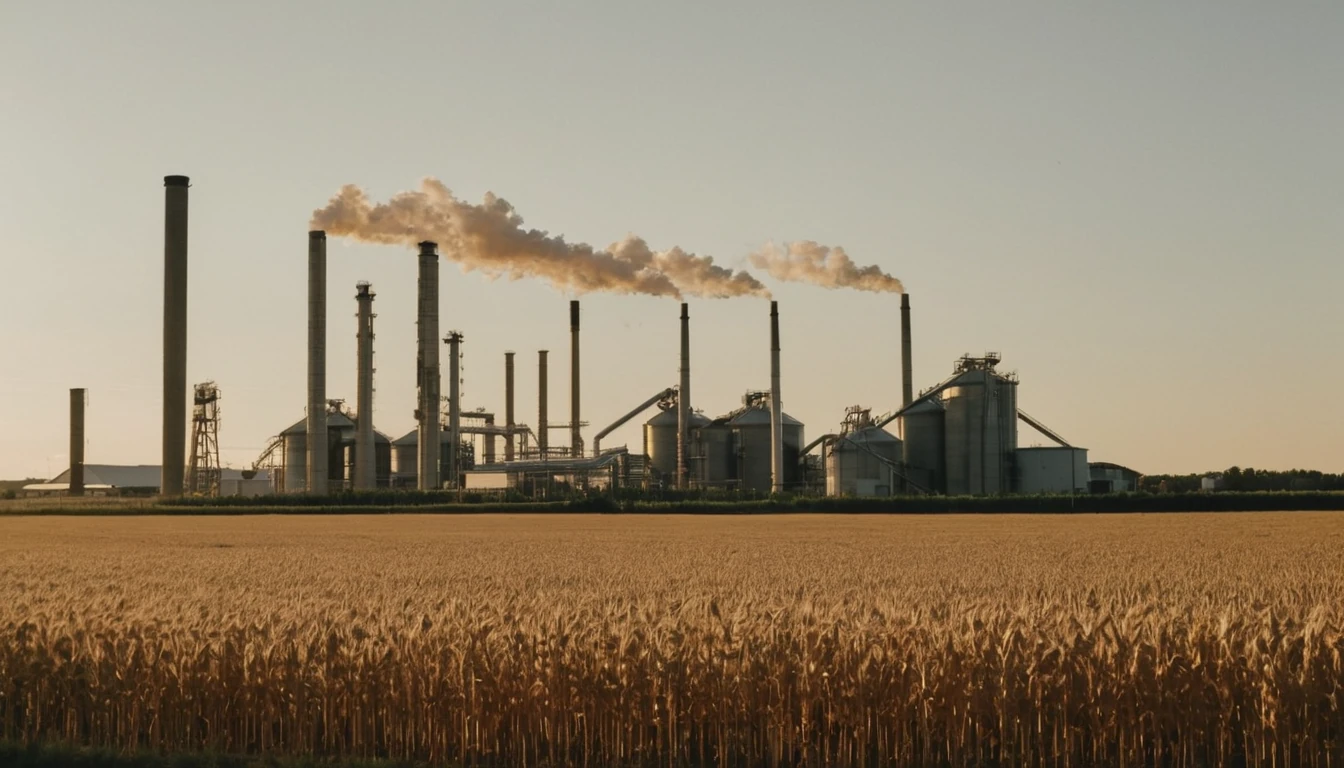
If you are sourcing corn-based ethyl alcohol for customers in Europe or the Middle East, the decision in front of you is rarely about ethanol content alone. It is whether the environmental profile attached to a shipment, covering water use, energy source and raw material origin, can survive a supplier audit and a customer questionnaire. Corn-based ethanol carries a footprint that is largely decided before distillation: in the field, in the mill, and in how the plant manages water, heat and co-products. This article sets out the mechanisms that genuinely move that footprint, the points where supplier claims usually fail under scrutiny, and the specification items a procurement, production or quality team can realistically ask to see. It is written from the perspective of an integrated corn dry-mill operator, so where our own product scope ends, we say so plainly.
What Makes a Sustainable Supply Claim Auditable?
The difference between a marketing statement and an auditable claim is measurement. A supplier that can show metered water intake, steam generation and electricity output per unit of alcohol produced is in a different position from one that describes its plant as "green" without a boundary definition. Four elements usually decide whether a claim holds up:
- A defined system boundary. Does the figure cover the plant gate only, or does it include corn cultivation, fertiliser production and inbound logistics? Mixing boundaries between suppliers makes comparison meaningless.
- A stated allocation rule. A dry mill produces alcohol, DDGS, corn oil and recovered CO2 from the same kernel. How the energy and emissions burden is split between those streams changes the alcohol figure substantially.
- Primary metering. Flow meters on water and steam, and kWh meters on the CHP, rather than estimated ratios carried forward from a design study.
- Lot-level traceability for raw material. Origin documentation that can be tied to a delivery, not to an annual average.
Without these four items, an environmental claim is a narrative. With them, it becomes a data point you can put in a tender and defend in a customer audit. Our own sustainability approach is built around reporting what the plant actually meters, and it is worth asking any supplier for the same structure.
Which Process Steps Dominate the Environmental Footprint of Corn-Based Ethanol?
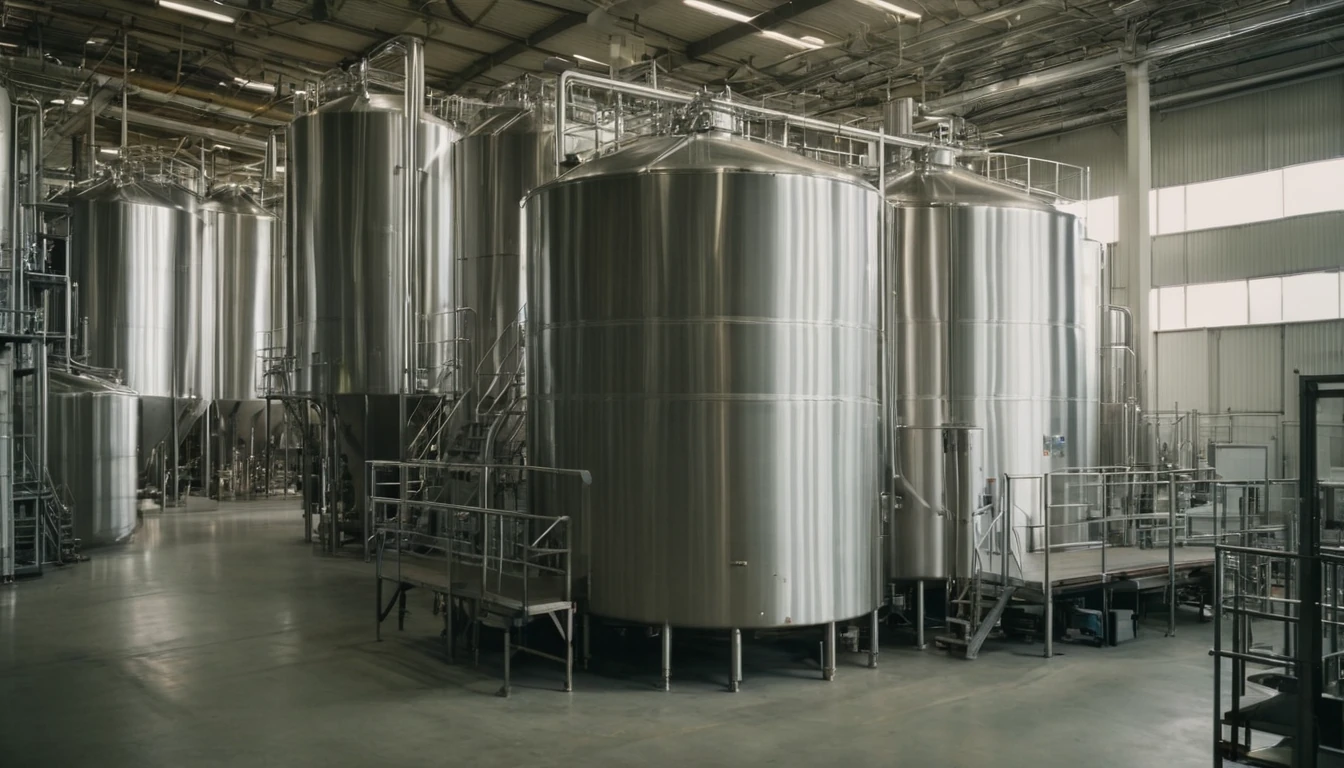
In a dry-mill configuration, the sequence runs from corn reception and grinding through slurry preparation and enzymatic saccharification, fermentation, and eight-column distillation, followed by stainless steel storage. Each step has a characteristic resource demand, and each has a characteristic failure mode.
Fermentation and CO2 Recovery
Yeast converts fermentable sugar into ethanol and carbon dioxide, and roughly one tonne of CO2 is generated for every tonne of alcohol. If that gas is vented, it leaves as a direct emission. If it is captured and purified, it becomes a saleable product: our plant recovers fermentation CO2 as food-grade liquid CO2 at up to 99.9% purity. The mechanism is straightforward (scrubbing, compression and purification), but the economics and the environmental benefit depend on local demand. Transporting liquid CO2 over long distances consumes energy and erodes the advantage; a recovery unit without a nearby offtaker is a capital asset running below its potential. The condition for a genuine benefit is therefore proximity of demand, not merely the presence of a recovery unit.
Water: Why a Condensate Polishing Unit Changes the Balance
Distillation and evaporation generate large volumes of condensate carrying dissolved solids and residual organics. A condensate polishing unit (CPU) treats that stream and returns it to the process; in our plant it recovers up to 80% of process water. The mechanism relies on removing both suspended material and dissolved load, because recycled water with residual volatile acidity will inhibit yeast at the next fermentation and will attack stainless steel surfaces over time. This is the condition under which water recycling fails: not at the treatment stage, but at the control stage. Conductivity, pH and microbial load have to be monitored continuously, and recycled water has to be segregated from final product contact points.
Energy: Biomass CHP and the Steam Balance
Dry milling is steam-intensive: cooking and saccharification need heat, thin stillage evaporation needs considerably more, and an eight-column distillation train needs a stable reboiler supply. A biomass-fired combined heat and power (CHP) unit supplies both steam and electricity, which decouples the plant from grid gas prices and from the carbon intensity of the local power mix. The mechanism fails in one predictable way: if biomass moisture content rises above the boiler design range, usable steam output per tonne of fuel falls, and peak loads get pushed onto a fossil backup. Fuel specification and fuel storage therefore belong in any serious energy discussion, not just the boiler nameplate.
How Does Raw Material Sourcing Change the Footprint?
For most corn-based ethanol, the agricultural stage dominates the life-cycle result, and within that stage nitrogen fertiliser is the single most influential input. Excess nitrogen applied beyond crop uptake is lost as nitrous oxide, a greenhouse gas with a very high global warming potential relative to CO2. This is a mechanism, not a slogan: the emission is a function of application rate, timing, soil moisture and rainfall, which means the same corn volume can carry quite different burdens depending on the agronomy behind it. A supplier that buys on price alone without asking about nitrogen practice has no visibility into its own largest emission line.
Origin distance matters too, but less than is often assumed. Inland transport of corn is a small share of the total, whereas the energy source at the mill and the fertiliser intensity in the field are large shares. This is why we source corn from Türkiye and concentrate traceability effort on lot-level documentation rather than on transport optimisation alone. Our non-GMO corn stream is verified per lot with documentation, which supports both identity preservation and origin traceability, though documentation alone does not reduce emissions; it makes the claim checkable.
| Parameter | Typical value or limit | How it is verified | Reference to name in a specification |
|---|---|---|---|
| Ethanol content, ENA 96% | 96.0% to 96.2% according to specification | Gas chromatography, supplier certificate of analysis | Ph. Eur. Ethanol (96 per cent) monograph |
| Water content, 96% grade | typically 3.5% to 4.5% by volume | Karl Fischer titration | FCC Ethanol Monograph |
| Methanol | typically below 50 ppm, tighter where stated | Gas chromatography | FCC Ethanol Monograph |
| Food-grade liquid CO2 | up to 99.9% purity | Certificate of analysis, gas chromatography | E 290 specification, Commission Regulation (EU) No 231/2012 |
| Process water recovery | up to 80% via the condensate polishing unit | Metered mass balance across the plant | Supplier mass balance statement, no harmonised standard |
Which Grade Should You Specify, and Where Does Our Scope Stop?
Grade choice is an environmental decision as well as a technical one. Every additional purification step consumes energy, so buying a higher grade than the application requires is a straightforward waste of resources. Our product scope covers ENA 96% (up to 96.2% in specification), denatured ethyl alcohol at a minimum of 96%, and technical ethyl alcohol at up to 95%. We do not produce grades beyond ENA 96%: higher-purity specifications are outside our scope, and we do not present equipment for them. Buyers who need those grades should source them elsewhere; buyers whose process only requires a 96% stream should not be paying the energy penalty of a tighter specification.
Where a technical or denatured grade is acceptable, saying so in the enquiry is worth as much as a price negotiation. The ENA 96% product page sets out the specification in detail, and the production technology page describes the configuration, including the eight-column distillation train and the stainless steel storage that protects the alcohol between production and dispatch.
How Should You Audit Water and Energy Claims?

A practical audit does not require a full life-cycle assessment. Three questions carry most of the weight. First, what is the specific water intake per cubic metre of alcohol, and how much of the discharge is returned through the CPU? Second, what share of steam and electricity comes from the biomass CHP over a twelve-month period, including outage periods when the backup runs? Third, how are co-products credited in the reported figure? Ask for meter data rather than design values, and ask for the boundary definition in writing. A supplier that answers all three consistently is a supplier whose other claims are probably also measured.
What Role Do Packaging and Logistics Play?
Packaging decisions are usually treated as commercial, but they carry environmental consequences. Bulk tanker delivery minimises packaging material per litre, but the benefit depends on return logistics: a tanker that travels empty for a long distance can offset the gain. IBCs introduce a reusable container into the chain, and the number of rotation cycles determines their real advantage. Stainless steel tanks at the customer site give the lowest packaging intensity where volume justifies the capital. The failure mode to watch in all three cases is moisture pickup: alcohol at 96% is hygroscopic, and a poorly sealed IBC or a tanker with inadequate drying between loads can shift the product outside specification during transit.
How Do Co-Products Change the Sustainable Supply Arithmetic?
A dry mill does not produce alcohol alone. Our plant produces corn DDGS through decantation, evaporation and drying, food-grade liquid CO2 recovered from fermentation, and distilled corn oil recovered separately. Under any recognised allocation approach, these streams carry part of the input burden, which reduces the figure attributed to the alcohol. The mechanism can also work in reverse: if DDGS drying consumes more energy than the co-product credit is worth, the net benefit shrinks. This is why drying decisions, and the local availability of wet feed buyers, belong in a sustainable supply conversation rather than being left to the sales team. It also explains why two plants with identical distillation equipment can report materially different alcohol footprints.
Decision Checklist for a Corn-Based Ethanol Supply Agreement
Use the following list to structure a supplier enquiry or an audit agenda. It is deliberately narrow, because a checklist that tries to cover everything gets used for nothing.
- Confirm the grade in writing: ENA 96%, denatured or technical, with the specification limits and the analytical method named against a published monograph.
- Request the system boundary definition for any environmental figure, including whether corn cultivation and inbound transport are inside it.
- Ask for specific water intake and the share of process water returned through the condensate polishing unit, supported by meter data.
- Ask for the biomass CHP share of steam and electricity over twelve months, including backup periods.
- Request the allocation rule applied to DDGS, corn oil and recovered CO2, and check that it is applied consistently year on year.
- Confirm lot-level origin documentation for the non-GMO corn stream and check that it ties to actual deliveries.
- Agree packaging and return logistics, and include a moisture specification for transport and storage.
- Confirm the product scope explicitly: if you need a grade beyond ENA 96%, verify that the supplier actually produces it before you build a specification around it.
For a sustainable supply decision, the useful test is not whether a supplier has a sustainability page, but whether the numbers behind it can be traced to a meter, a lot number and a stated boundary. Teams that want to take this further can raise specific parameters through our contact page; we would rather answer a narrow technical question than a broad one.
References and standards
- Ph. Eur. Ethanol (96 per cent) Monograph, European Pharmacopoeia. The reference monograph for the 96% grade and the analytical expectations around it.
- FCC Ethanol Monograph, Food Chemicals Codex. Useful for methanol and water limits where a food-grade alcohol specification is being drafted.
- Regulation (EC) No 1333/2008 on food additives. The framework regulation that governs E 1510 ethanol when the application is food-related.
- Commission Regulation (EU) No 231/2012, E 1510 specifications. The accompanying specification text that buyers should cite alongside the framework regulation.
- Türk Gıda Kodeksi Gıda Katkı Maddeleri Yönetmeliği, E 1510 etanol. The Turkish national reference for buyers qualifying material for the domestic market.
- Regulation (EC) No 1907/2006 (REACH). Relevant to documentation obligations and safe handling information across the supply chain.
Need ENA 96% specs or pricing?
Our sales and technical team can share COA, specification sheets and export documentation.
Who prepared this article?
This content was prepared by the Agro Kimya technical team working across production, quality and export operations. Contact our team directly for product specifications, process details and supply conditions.
Editorial policy: Blog articles are prepared by the Agro Kimya technical team; product and process information reflects our plant operations. Certificates and laboratory results are shared only with current documents.