Food Grade Ethanol: Quality Criteria for Beverage Manufacturing
Use of food grade ethanol in the beverage sector. Compliance with regulations and purity standards that protect consumer taste preferences and safety.
If you are qualifying a food grade ethanol supplier for a beverage plant, the real question is not whether the ethanol is "pure", but which impurities at which concentrations will alter your product and your compliance position. Ethanol is never an inert diluent: it carries aroma, it extracts flavour compounds, and it concentrates whatever volatile impurities enter with it. A specification that looks acceptable on a certificate of analysis can still fail in a flavouring application if the congener profile is wrong. This article sets out the criteria that actually decide fitness for beverage manufacturing, the mechanisms behind each one, and the points a procurement, production or quality team should check before approving a lot.
What does food grade ethanol mean in a beverage plant?
In practice, "food grade" is a claim about end use, not a single number. It means the material meets a recognised monograph or additive specification, is produced under a controlled process, and is traceable back to its raw material. Because ethanol is chemically the same molecule regardless of origin, the difference between grades lies in the impurity envelope around it and in the documentation that proves it.
Beverage manufacturers use ethanol in several ways: as a carrier for flavour extracts and essences, as an extraction solvent for botanicals, as a processing aid, and as a base for low-alcohol or alcohol-free formulations where the ethanol is later removed or reduced. Each use sets a different sensitivity to impurities. A carrier solvent for a strongly flavoured extract tolerates more than a base for a delicate, lightly flavoured product where the ethanol note is perceptible.
This is why the supplier conversation should move quickly from "what percentage" to "what is your impurity profile, how do you control it, and how do you document it lot by lot".
Which quality parameters decide whether a lot is fit for beverage use?
The parameters below are the ones that most often drive accept or reject decisions. The limits shown are typical values drawn from the referenced monographs and from common commercial specifications; your own specification should be agreed explicitly with the supplier and justified by the application.
| Parameter | Typical requirement for beverage use | Typical method or reference basis |
|---|---|---|
| Ethanol content | Minimum 96.0% v/v at 20 °C; specification values commonly stated up to 96.2% | Density or alcoholometric determination, per Ph. Eur. Ethanol (96 per cent) and FCC Ethanol Monograph |
| Methanol | Not more than 0.02% v/v per monograph; buyers often set a tighter internal limit for flavour applications | Gas chromatography, per Ph. Eur. and FCC monographs |
| Volatile impurities (acetaldehyde, acetal, ethyl acetate) | Controlled to a supplier specification that protects aroma neutrality; limits are application dependent | Gas chromatography, per supplier specification and monograph general limits |
| Higher alcohols (fusel oils) | Low and consistent, since these carry harsh, solvent-like notes that survive dilution | Gas chromatography; consistency assessed across lots |
| Water content | Approximately 4.0 to 4.5% v/v for the 96% grade, per specification | Karl Fischer or density based determination |
| Acidity | Low, expressed as acetic acid, per the applicable monograph | Titrimetric |
| Evaporation residue | Low, per the applicable monograph | Gravimetric |
| Non-GMO status of the corn stream | Verified per lot with documentation | Supplier documentation review and lot traceability |
Why methanol is the first number a quality team checks
Methanol forms when pectin in the raw material is enzymatically demethylated during saccharification and fermentation. Corn contains comparatively little pectin, which is one reason a corn-based stream is easier to control than a fruit mash, but the risk never disappears. Methanol has a lower boiling point than ethanol, so an effective distillation train removes it in the heads fraction. The failure mode is not usually a raw material problem; it is a column problem. If the heads cut is shortened to increase yield, or if reflux ratio drifts during a throughput push, methanol is carried forward into the product. This is why consistent distillation control matters more than a single pass or fail test.
How higher alcohols and acetaldehyde change what the consumer tastes
Higher alcohols (propanol, isobutanol, isoamyl alcohol and related compounds) have higher boiling points than ethanol and are removed in the fusel section of the distillation train. When they slip through, they are not detected as a distinct flavour at low concentration; they flatten and roughen the overall profile, and the effect grows in lightly flavoured products. Acetaldehyde sits at the opposite end: it is a low-boiling compound associated with a sharp, green, apple-like pungency. Both are controlled by the same fundamental principle, the correct fractionation of a multi-component mixture by boiling point, which is why an eight-column distillation sequence can achieve a cleaner cut than a shorter train, provided it is operated inside its design envelope.
How do E 1510 and food additive rules frame the specification?
When ethanol is used as a food additive rather than as a beverage base, its legal identity in the European Union is E 1510. Regulation (EC) No 1333/2008 establishes the authorised uses and the carry-over principle, and Commission Regulation (EU) No 231/2012 sets the specifications the material must meet. In Türkiye, the Türk Gıda Kodeksi Gıda Katkı Maddeleri Yönetmeliği defines E 1510 etanol in the same additive framework.
Two practical consequences follow. First, the specification you agree with your supplier should be written so that it can be mapped to E 1510 requirements without translation gaps, otherwise a documentation review at audit is unnecessarily difficult. Second, residue and carry-over calculations belong to your product formulation, not to the ethanol supplier, so the purity of the input determines how much room you have in the final product. These references anchor the specification in texts that both parties can check.
Why does the production route determine the impurity profile?
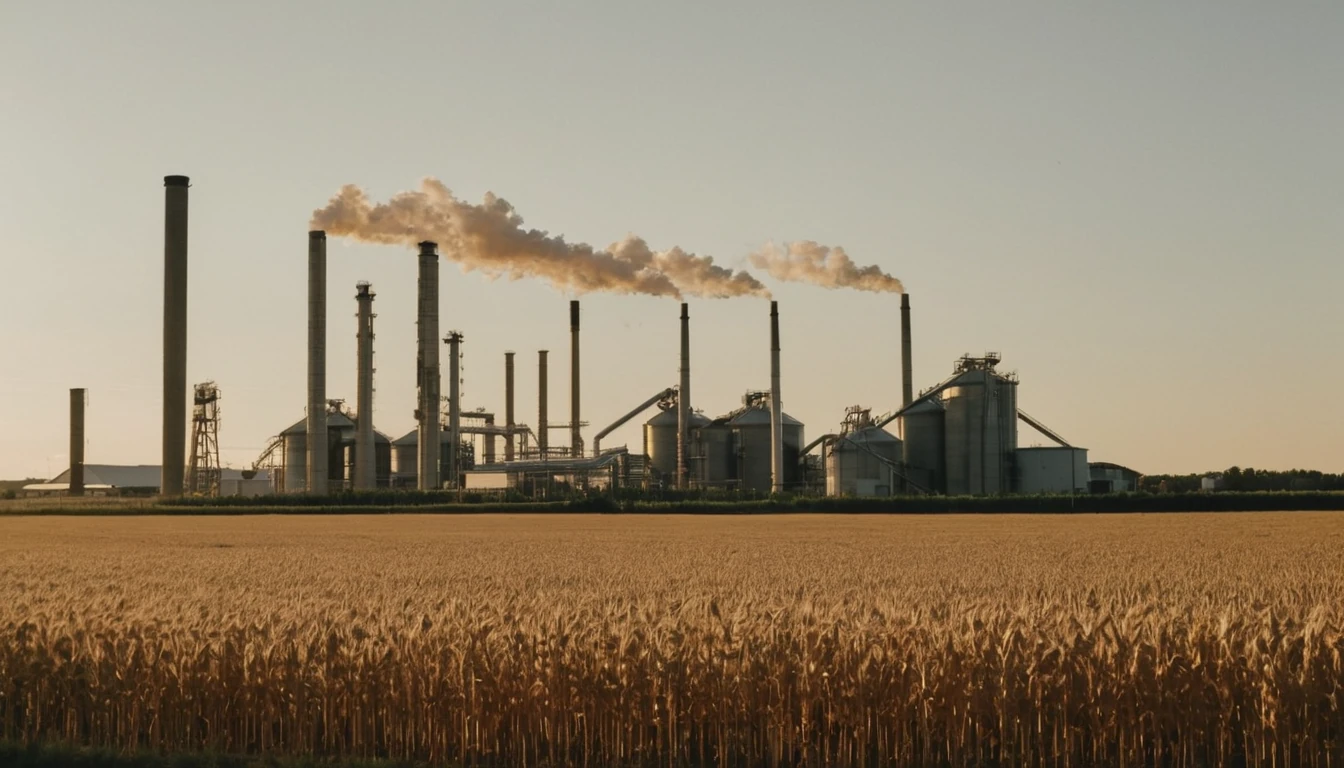
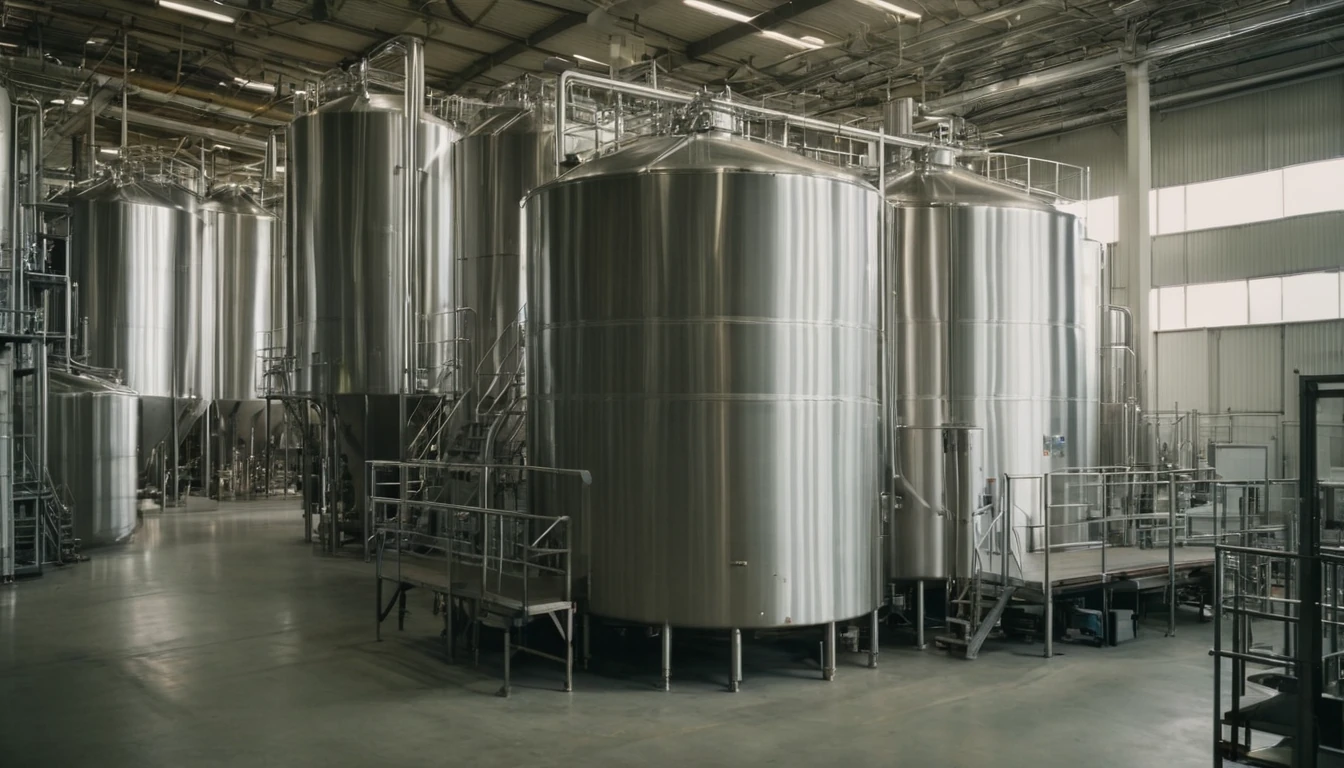
Impurity profile is a process outcome, not a marketing attribute. In an integrated corn dry-mill plant, the sequence runs from corn reception and grinding through slurry preparation and enzymatic saccharification, fermentation, distillation and stainless steel storage. Every step leaves a fingerprint on the final ethanol.
Enzymatic saccharification determines how much fermentable sugar is available and how much residual material carries into fermentation. Fermentation conditions determine the balance of ethanol, acetaldehyde and higher alcohols, because these are metabolic side products whose formation depends on yeast stress, temperature and contamination status. Distillation determines which of them survive. Storage determines whether the product stays at specification, since prolonged contact with incompatible materials or moisture ingress can shift acidity and residue values.
The supporting infrastructure matters as well. A condensate polishing unit that recovers up to 80% of process water reduces the variability introduced by water quality, and a biomass-fired combined heat and power unit supplying steam and electricity stabilises the thermal conditions on which distillation depends. You can read more about these choices on our production technology page and in our sustainability approach.

How should a non-GMO corn stream be verified?
For beverage customers, the raw material question is usually about identity preservation rather than composition. Non-GMO status cannot be demonstrated by an analytical test on the finished ethanol, because the molecule is identical either way. It has to be demonstrated by segregation and documentation.
A workable verification model has three layers: supplier declarations from the corn origin, segregation at reception so that verified lots are not commingled with unverified material, and lot-level documentation that links a delivered ethanol batch back to the verified corn stream. Agro Kimya sources corn from Türkiye and verifies the non-GMO stream per lot with documentation, which allows a buyer to attach a specific document to a specific delivery rather than to an annual statement. When you audit a supplier, ask to see a worked example: pick a recent delivery note and follow it back.
What changes when a formulation calls for a higher purity grade?
Ethanol at around 96% v/v is close to the composition at which ethanol and water cease to separate by simple distillation, which is why the 96% grade is the natural product of a well-run distillation train. Grades above that require a different separation principle and therefore different equipment. Our product scope is ENA 96% (up to 96.2% in specification), denatured ethyl alcohol at minimum 96%, and technical ethyl alcohol up to 95%. Higher purity grades are outside our scope, and a buyer whose process requires them should qualify a supplier with the corresponding unit operation rather than assume equivalence.
For beverage applications that specify the 96% grade, the product is described on the ENA 96% product page. Denatured alcohol is not interchangeable with undenatured material in food applications, so the denaturant must be declared and assessed against your own regulatory position before use.
How should food grade ethanol be received, stored and handled?
Most specification failures after delivery come from handling, not from production. Ethanol is hygroscopic and a good solvent, so it will absorb moisture from humid air and will extract compounds from unsuitable seals, gaskets and linings. Both effects show up as increased water content, increased evaporation residue or changed acidity.
- Receive in stainless steel tanks, IBCs or bulk tankers, and confirm the material of construction before the first delivery.
- Keep vessels closed and vented correctly; an open drum in a humid area will drift upward in water content.
- Check elastomer compatibility for gaskets, hoses and pump seals, because extractables from these components appear in the residue test.
- Store away from ignition sources and oxidisers, and follow the safety data sheet for handling and ventilation.
- Retain a sample from each delivery so that any later sensory or analytical question can be traced to a lot.
REACH registration obligations under Regulation (EC) No 1907/2006 and the corresponding safety documentation should be confirmed as part of supplier onboarding, together with the classification and labelling information on the safety data sheet.
What belongs on a supplier qualification checklist?
A disciplined supplier decision can be reduced to a short, verifiable list. Each item should produce a document or a recorded answer, not an impression.
- Written specification that names the grade (for example ENA 96%), the ethanol content range, and limits for methanol, volatile impurities, higher alcohols, water, acidity and evaporation residue.
- Analytical method for each parameter, and confirmation that the method matches the monograph or standard you intend to cite.
- A worked traceability example: one delivery traced back to its corn lot, including the per lot non-GMO documentation.
- Process description covering fermentation, distillation and storage, with the control points that protect the volatile impurity profile.
- Material of construction for tanks, IBCs and tankers, plus gasket and seal compatibility data.
- Safety data sheet, classification and REACH status, reviewed by your own safety function.
- Agreed sampling and retention plan, and a stated response time for a nonconforming lot.
- Commercial clarity on grades outside the supplier's scope, so that no future requirement is assumed to be covered.
If you are evaluating food grade ethanol for a beverage application, the shortest route to a decision is to send your target specification and intended use through the contact page and ask for the corresponding lot documentation. A supplier who can answer the impurity, traceability and handling questions in one pass is usually the one whose product will stay at specification across deliveries, not just on the first certificate.
References and standards
- FCC Ethanol Monograph, Food Chemicals Codex: the reference point for ethanol used as a food ingredient in the United States, useful for impurity and identity parameters.
- Ph. Eur. Ethanol (96 per cent) Monograph, European Pharmacopoeia: the most commonly cited specification basis for the 96% grade in European supply chains.
- Commission Regulation (EU) No 231/2012, E 1510 specifications: defines the additive specification that a supplier's certificate should be mappable to.
- Regulation (EC) No 1333/2008 on food additives: establishes authorised uses and carry-over logic for ethanol as E 1510.
- Türk Gıda Kodeksi Gıda Katkı Maddeleri Yönetmeliği, E 1510 etanol: the Turkish additive framework, relevant when sourcing or selling into Türkiye.
- Regulation (EC) No 1907/2006 (REACH): governs registration and safety communication obligations relevant to supplier onboarding, not product purity.
Need ENA 96% specs or pricing?
Our sales and technical team can share COA, specification sheets and export documentation.
Who prepared this article?
This content was prepared by the Agro Kimya technical team working across production, quality and export operations. Contact our team directly for product specifications, process details and supply conditions.
Editorial policy: Blog articles are prepared by the Agro Kimya technical team; product and process information reflects our plant operations. Certificates and laboratory results are shared only with current documents.