Understanding ENA 96%: Purity Standards in Dry-Milled Ethanol
Technical definition of ENA 96% and purity limits. Explore the critical role of ethanol purity in industrial applications and its impact on end-product quality.
When a buyer signs off an ENA 96% purchase specification, the question is rarely about the headline number alone: it is about which impurities are controlled, at what limit, and by which method. ENA 96% is a defined industrial grade of extra neutral alcohol, not a generic solvent, and the difference shows up in yield, odour, shelf life and regulatory fit. This article explains what the grade actually fixes, where the margins sit, and how an integrated dry-milled corn plant reaches it. It also sets out the checks that should appear in a purchase specification before the first tanker is accepted.
What Does the Name ENA 96% Actually Fix?
ENA stands for extra neutral alcohol, and the number refers to ethanol content by volume. A 96% grade therefore contains roughly 4% by volume of water plus trace organic compounds, and the word "neutral" is a claim about the congener profile rather than a numeric limit. This is the practical trap: two suppliers can both sell a product described as 96% while working to completely different ceilings for aldehydes, methanol, higher alcohols and residue. The grade name sets the strength; the specification sets the quality.
Our own scope is deliberately narrow and worth stating plainly. Agro Kimya produces ENA 96% (up to 96.2% by volume within specification), denatured ethyl alcohol at a minimum of 96% by volume, and technical ethyl alcohol up to 95% by volume. The denatured grade has a deliberately added denaturant, which changes the composition and makes it unsuitable for food or pharmaceutical use. Higher-purity grades beyond ENA 96% sit outside our scope, and we do not describe or supply a unit we do not operate. Buyers who need a compendial grade tighter than ENA 96% should source it elsewhere and should not assume that a "96%" line on a data sheet closes that gap.
Why Does Column Count Matter More Than the Headline Purity?
Distillation separates ethanol from water and from trace organics by relative volatility, and the economics of that separation sit in the cut points rather than in the number of theoretical plates alone. Light ends such as acetaldehyde and ethyl acetate boil below ethanol and concentrate in the overhead stream. Higher alcohols such as propanol, isobutanol and isoamyl alcohol behave differently depending on their concentration in the liquid: in the rectifying section they accumulate and are removed through side draws. Methanol is more volatile than ethanol and leaves preferentially in the early fractions. A single column forces these cuts to overlap, so tightening the heads cut to reduce aldehydes sends ethanol to the receiver and cuts yield.
A multi-column train allows each cut to be taken at its own point and at its own reflux ratio. In our plant, distillation runs as an eight-column configuration, followed by stainless steel storage. The storage material matters more than it appears: carbon steel can release iron into a product that is already slightly acidic, producing colour and a non-volatile residue result that fails a residue test long after the ethanol assay has passed.
There is also a physical ceiling that any buyer should understand. At atmospheric pressure, ethanol and water form a minimum-boiling azeotrope at approximately 95.6% ethanol by mass, which corresponds to roughly 97% by volume. ENA 96% by volume is about 94% by mass, comfortably below that point, so rectification alone can reach the grade. Grades above that azeotropic composition require an additional separation step that is not part of our flowsheet, which is one reason we state clearly that higher-purity grades are outside our scope.
Which Impurities Decide Whether the Batch Works in Your Process?
At 96% strength, the bulk composition is fixed, so differentiation between suppliers sits in the parts-per-million range. A shift of a few parts per million in an aldehyde can be invisible on an assay certificate and decisive in an odour panel or a catalytic step. The sections below explain the mechanisms rather than listing limits, because the limits must be agreed application by application.
Do light ends matter more than fusel alcohols?
They fail differently, which is why both belong in the specification. Acetaldehyde is more volatile than ethanol, so it concentrates in the heads and is removed early, but it also reacts with ethanol under mildly acidic conditions to form acetals. Those acetals are less volatile and can survive the distillation cut, then release the aldehyde again during storage or during a downstream heating step. That is how a batch that passed release can develop an off-odour weeks later. Fusel alcohols behave in the opposite direction: they are heavier than ethanol, accumulate in the rectifying section, and are drawn off as fusel-rich side streams. Residual fusel alcohols raise the evaporation residue, shift solvent power for resins and oils, and contribute a characteristic pungent note that is easy to detect in food and cosmetic applications.
How is methanol controlled in a corn dry mill?
Methanol originates mainly from the demethylation of pectin in the corn cell wall, so the precursor load is a raw material property rather than a process invention. It is more volatile than ethanol and is stripped preferentially in the early distillation fractions, but no cut is absolute: widen the heads take to remove more methanol and ethanol losses rise, narrow it and methanol carries forward. Control therefore combines corn selection, fermentation hygiene that limits the pectin-degrading enzyme activity associated with microbial contamination, and a distillation cut agreed against the destination market. The methanol limit is a regulatory and toxicological question, not a grade-name question, so it should be written into the specification explicitly.
Why does water content matter at 96%?
Water is not a contaminant to be removed in this grade: at 96% by volume it is roughly 4% by volume of the product and part of the definition. It sets solubility behaviour. Hydrophobic active ingredients, natural resins and some oils can cloud or split when the water content drifts, and water also participates in slow ester hydrolysis during storage. Water content shifts density and refractive index in a predictable way, which is why density is a fast release check, provided the measurement temperature is stated on the certificate. Storage in stainless steel limits iron pickup, and iron is exactly the species that turns a marginal water content into a visible colour problem.
How Should You Read an ENA 96% Certificate of Analysis?
The certificate is only comparable if the methods are comparable. Gas chromatography with flame ionisation detection is the typical route for ethanol strength and organic impurities, Karl Fischer or gas chromatography for water, and titration for acidity. Aldehydes may be reported by gas chromatography or by a titrimetric method, and the two do not give numerically identical results at low levels. Before accepting a specification, ask which method sits behind each limit, what the detection limit is, and whether a chromatogram is available on request.
The table below shows the parameter structure a buyer should expect. The limits are typical ranges and must be replaced by values agreed in the contract, referenced to a named standard.
| Parameter | Typical ENA 96% requirement (agree in specification) | Typical determination |
|---|---|---|
| Ethanol strength | 96.0% v/v minimum, up to 96.2% v/v within supplier specification | Density or gas chromatography, per compendial method |
| Methanol | Typically in the low tens of mg/kg; limit set by destination market | Gas chromatography (FID) |
| Aldehydes, expressed as acetaldehyde | Typically a low mg/kg ceiling, agreed by application | Gas chromatography or titrimetric method |
| Higher alcohols (fusel) | Typically a few hundred mg/kg maximum, per specification | Gas chromatography (FID) |
| Water | Typically about 4% v/v, the balance of the grade | Karl Fischer or gas chromatography |
| Acidity, expressed as acetic acid | Typically below 20 mg/kg, per specification | Titration |
| Non-volatile matter | Typically 10 to 25 mg/L maximum | Evaporation and gravimetry |
| Relative density | Approximately 0.805 to 0.812 at 20 C, per compendial reference | Pycnometer or oscillating densitometer |
Two administrative checks catch most disputes before they start. First, confirm that the batch number on the certificate matches the tank or tanker compartment, and that the sample was a composite rather than a single point. Second, confirm the retention period for the retained sample, because odour and acetal complaints usually arrive weeks after delivery, when a retained sample is the only way to establish whether the product changed in transit or after receipt.
Where Does a Dry-Mill Flowsheet Change the Purity Outcome?
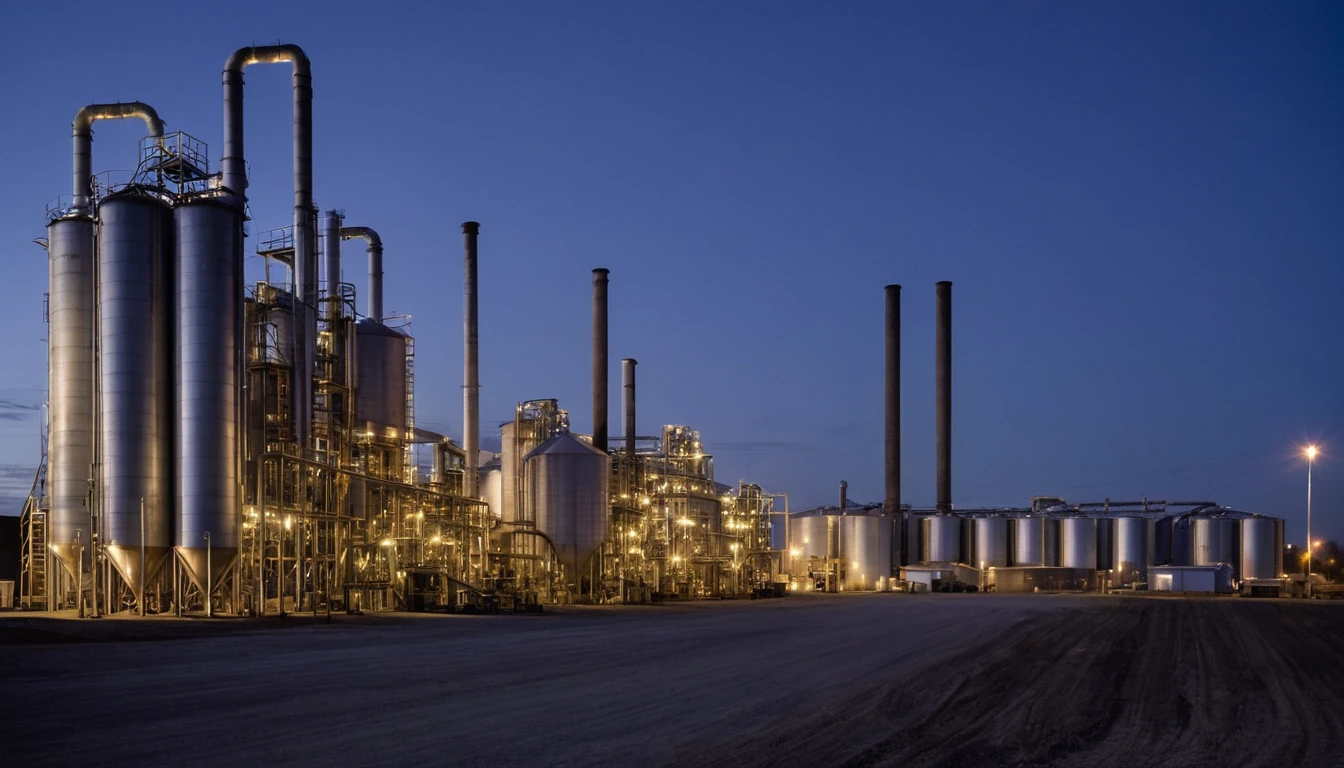
Agro Kimya operates an integrated corn dry mill in the Kozan Organized Industrial Zone in Adana, Türkiye. Corn reception and grinding are followed by slurry preparation and enzymatic saccharification, fermentation, eight-column distillation and stainless steel storage. The integration matters for purity because each upstream decision narrows or widens the impurity load that distillation must remove.
Saccharification is the clearest example. If enzymatic conversion is incomplete, residual dextrins pass into fermentation as unfermentable or slowly fermentable sugars. That raises osmotic stress on the yeast, slows the rate, and shifts the byproduct spectrum toward organic acids and esters that are costly to separate later. Fermentation hygiene matters for the same reason: a lactic or acetic infection raises acidity and ester formation, and distillation can polish a clean fermentation but cannot economically rescue a contaminated one.
Downstream recovery closes the loop. Carbon dioxide is recovered from fermentation and supplied as food-grade liquid CO2 up to 99.9%. Whole stillage is separated by decantation, the thin fraction is evaporated, and the concentrate is dried with the solids to produce corn DDGS. Distilled corn oil is recovered separately, which removes a lipid load before evaporation and reduces fouling on the evaporator surfaces, keeping heat transfer stable and steam demand predictable. A biomass-fired combined heat and power unit supplies steam and electricity, and stable steam pressure stabilises column hydraulics, which in turn stabilises the cut points that determine the impurity profile. A condensate polishing unit recovers up to 80% of process water, reducing the freshwater draw without changing the specification. Details of the flowsheet are set out on our production technology page, and the resource side is described under our sustainability approach.

How Does Raw Material Traceability Support the Grade?
Corn is sourced from Türkiye, and the non-GMO corn stream is verified per lot with documentation. Lot-level verification means each incoming delivery is tied to supplier documentation, sampled, and retained so that a finished batch can be linked back to the material it came from. Segregation prevents commingling of the verified stream with conventional corn, and document retention allows the chain to be reconstructed during a customer audit.
This is a documentation requirement, not a certification claim. If your specification requires third-party certification of a particular scheme, that requirement must be raised during qualification and agreed contractually, because the evidence base is the retained lot documentation and nothing beyond it.
Which Applications Fit ENA 96%, and Which Sit Outside Our Scope?
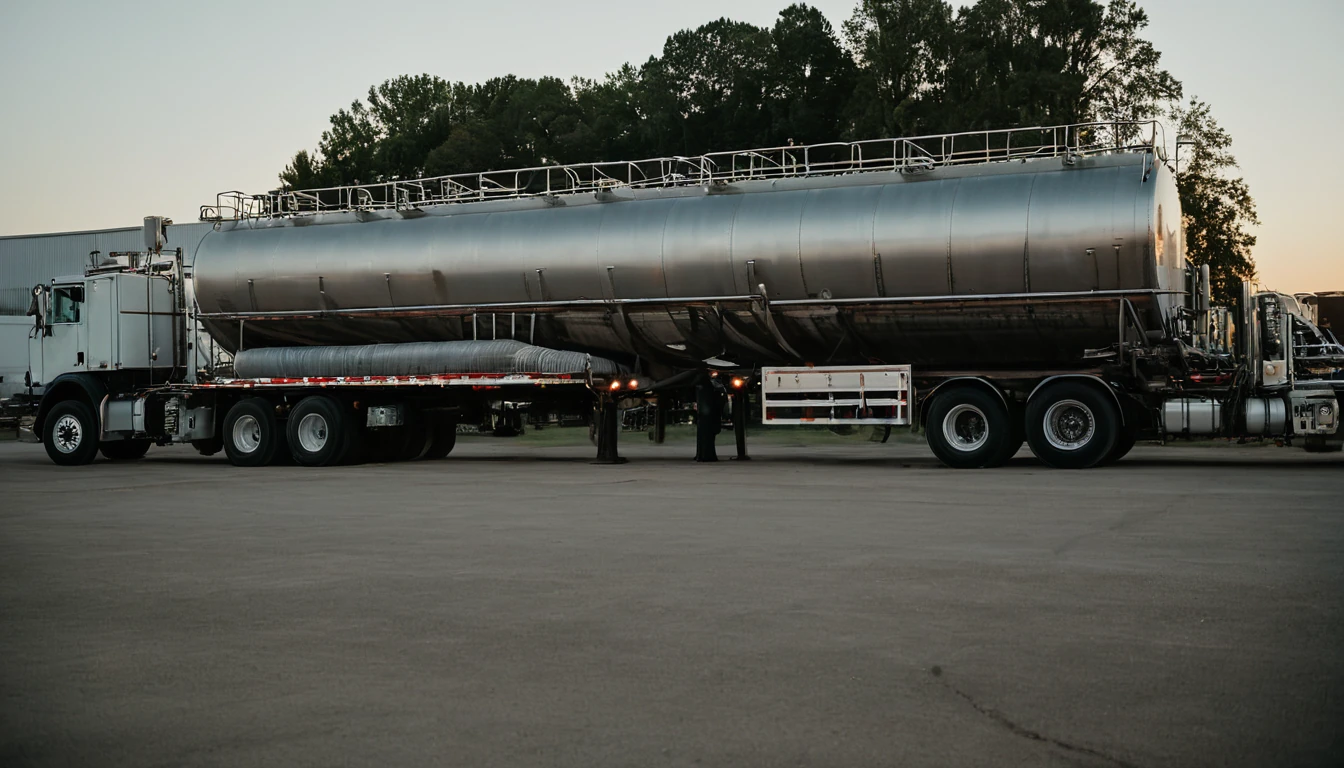
ENA 96% is used as a solvent and extraction medium, as a carrier in formulations, and as a food additive where the applicable specification is met. In the European Union, ethanol is authorised as food additive E 1510 under Regulation (EC) No 1333/2008, with specifications laid down in Commission Regulation (EU) No 231/2012. In Türkiye, the corresponding reference is the Türk Gıda Kodeksi Gıda Katkı Maddeleri Yönetmeliği entry for E 1510 ethanol. These regulations are a reference point for the buyer. Which limit applies depends on the end use, the market and the customer's own specification, and that is where the technical conversation should start. Our ENA 96% product page lists the grades and packaging formats we actually supply.
Denatured ethyl alcohol at a minimum of 96% by volume serves non-food uses where the denaturant is acceptable or required. Technical ethyl alcohol up to 95% by volume serves applications where a lower strength and a wider impurity profile are tolerable. Applications that demand a compendial monograph grade tighter than ENA 96%, or a strength above the ENA 96% ceiling, are outside our scope and should be qualified with a supplier who operates the relevant unit.
What Should a Purchase Specification for ENA 96% Contain?
A specification that survives contact with production is short, method-specific and testable. Use the following as a qualification checklist, and replace every "typical" value with a number agreed in writing.
- Strength window: minimum 96.0% v/v, with the upper bound (up to 96.2% within specification) stated so that density control is unambiguous.
- Impurity ceilings: methanol, aldehydes as acetaldehyde, higher alcohols as a group, and acidity, each with a named test method and detection limit.
- Water content, with the determination method and the temperature at which density is measured.
- Non-volatile matter and colour or odour acceptance criteria, including the panel or reference standard used.
- Denaturant identity and concentration for denatured grades, and a clear statement that the grade is not for food use.
- Packaging: stainless steel tank, IBC or bulk tanker, with the material and cleaning record agreed per delivery.
- Sampling and retention: composite sampling point, retained sample period, and the documents issued with each lot.
- Traceability: lot-level documentation for the non-GMO corn stream, with the audit route defined.
- Deviation handling: who is notified, in what time, and what evidence accompanies a re-test.
- Regulatory reference: the food additive or industrial specification that applies in the destination market, cited by name.
For specification discussions, sample requests and delivery formats, the contact page reaches the technical team directly. Confirm the method behind each limit before the first order: the ENA 96% grade name tells you the strength, but only the agreed specification tells you the quality.
References and standards
- Ph. Eur. Ethanol (96 per cent) Monograph, European Pharmacopoeia: the closest published reference for a 96% v/v ethanol grade, useful for structuring strength and impurity tests.
- USP Ethanol Monograph, United States Pharmacopeia: an alternative compendial framework, useful when a destination market expects USP-style test methods.
- FCC Ethanol Monograph, Food Chemicals Codex: the food-chemical framing for ethanol used as an ingredient or processing aid.
- Regulation (EC) No 1333/2008 on food additives: establishes the legal basis for ethanol as additive E 1510 in the European Union.
- Commission Regulation (EU) No 231/2012, E 1510 specifications: sets the additive specification to which an EU food-use claim must be tested.
- Türk Gıda Kodeksi Gıda Katkı Maddeleri Yönetmeliği, E 1510 etanol: the Turkish reference for ethanol as a food additive, relevant for domestic food applications.
Need ENA 96% specs or pricing?
Our sales and technical team can share COA, specification sheets and export documentation.
Who prepared this article?
This content was prepared by the Agro Kimya technical team working across production, quality and export operations. Contact our team directly for product specifications, process details and supply conditions.
Editorial policy: Blog articles are prepared by the Agro Kimya technical team; product and process information reflects our plant operations. Certificates and laboratory results are shared only with current documents.