5 Critical Mistakes When Selecting Extra Neutral Alcohol
Common pitfalls buyers face when selecting extra neutral alcohol. A checklist for establishing a procurement strategy that balances quality and cost effectively.
Should you select extra neutral alcohol on the lowest delivered price, or on a specification your own quality team can defend after the first tanker arrives? Most buyers answer that question too late, once the tender is framed and suppliers are already quoting against different grades. The five mistakes below show where that framing usually fails, and the mechanism behind each failure rather than only its symptom. Each section is written for the person who fixes the specification, not only for the person who compares the quotes.
Mistake 1: Comparing extra neutral alcohol on price per litre alone
Price per litre is the first number a buyer sees and the least informative one. Ethanol at 96% v/v still carries several percent water by volume, so the useful comparison is cost per litre of ethanol delivered, adjusted for the grade your process actually needs. A quote for a technical grade at up to 95% will look cheaper per litre while delivering less ethanol per tanker and more water into your reaction or formulation.
The second hidden cost is rejection. A lot that fails an odour panel, an aldehyde limit or a water specification is not simply returned: it occupies tank capacity, triggers re-sampling, delays production and, in the worst case, contaminates the receiving tank. The mechanism is well known to anyone who has run a packaging line. Ethanol is an effective solvent, so it lifts residues from hoses, gaskets and tank coatings and carries them into the next analytical result. A supplier that controls storage and transfer surfaces removes that pathway; a supplier that does not passes the cost downstream.
Build your comparison on delivered cost per litre of ethanol, add the expected cost of retesting and rejection, and only then rank the offers. This is the first practical element of any procurement strategy for this product.
Mistake 2: Reading the 96% figure as a single, comparable grade
At atmospheric pressure the ethanol and water system reaches its azeotropic point at approximately 95.6% w/w ethanol, which corresponds to about 96% v/v at 20 °C. That is why 96% products sit at a distillation boundary rather than in the middle of a comfortable range. Small shifts in water content move the density, and density is how most laboratories convert an apparent strength into a declared strength. A result reported without a temperature basis and a method reference is therefore not comparable with another laboratory's result, even when both numbers read 96.
Ask for the specification window, not the nominal figure. Our ENA 96% is specified up to 96.2% v/v, and the window is what the certificate of analysis must fall inside, lot after lot. When the specification is silent on temperature basis and test method, two compliant suppliers can deliver materially different material and both will argue they are right. Grades above ENA 96% are outside our production scope; if your application requires them, state that at tender stage rather than discovering the mismatch at sampling. The full window and packaging options are listed on the ENA 96% product page.
Mistake 3: Mixing neutral, denatured and technical alcohol in one tender
These are three different products with three different risk profiles, and a tender that says only "ethanol 96%" will attract all three. Denatured alcohol contains an added denaturant, which changes the boiling behaviour, the odour, the gas chromatographic fingerprint and, decisively, the permitted end use. Technical grade at up to 95% carries more water and a wider impurity profile than a neutral grade. Neutral grade is the specification you buy when the alcohol must not contribute taste, odour or reactive impurities to the finished product.
The failure mode is quiet. A buyer who receives denatured material in place of neutral material may pass every strength check and still fail an odour panel, a sensory test on the finished good, or an audit question about what entered the vessel. Make the grade the first line of the purchase order, not a footnote, and require the denaturant identity and concentration on the safety data sheet whenever a denatured grade is quoted. Even then, confirm that your end use permits a denatured stream before you place the order.
Mistake 4: Ignoring the process route behind the specification
Two suppliers can meet the same certificate of analysis and still behave differently across a year of deliveries, because the impurity profile is set by the process, not by the final certificate. Corn dry milling, slurry preparation and enzymatic saccharification determine which sugars and proteins enter fermentation. Incomplete saccharification leaves residual sugars that shift the volatile profile; excessive heating during drying shifts the odour of the co-products and, indirectly, the load on the distillation train.
Distillation is where the separation actually happens. An eight column train removes light ends, aldehydes, esters, higher alcohols and methanol as separate side streams across successive boiling ranges, so each column exists to solve a specific contamination problem. Column count is a useful proxy for fractionation capability, but it is not a guarantee: what matters is whether the operating recipe is held stable when the raw material changes. You can read more about the configuration on our production technology page.
Why fermentation co-products matter to your mass balance
A dry mill that recovers carbon dioxide from fermentation, produces corn DDGS through decantation, evaporation and drying, and recovers distilled corn oil separately is operating an integrated mass balance rather than a single product line. For a buyer this is a stability signal. When co-product revenues are recovered and evaporation and drying are controlled, there is less commercial pressure to push distillation beyond its normal operating window to protect margin. It also means a change in one stream shows up as a change in the others, which is a useful early warning during supplier audits.
Resource handling belongs in the same conversation. A condensate polishing unit that recovers up to 80% of process water, and a biomass fired combined heat and power unit supplying steam and electricity, reduce exposure to utility price swings and to discharge constraints. For buyers building scope 3 reporting, that operational structure is worth asking about directly; our our sustainability approach page sets out the principles we work to.
Mistake 5: Treating packaging and logistics as an afterthought
Ethanol is a flammable liquid and a solvent, and the container is part of the specification. Carbon steel and galvanised surfaces can release iron and other ions into the product, producing colour and catalysing ester formation over time. That is why stainless steel storage, IBCs with a suitable inner liner and dedicated bulk tanker compartments are not cosmetic choices. They are the difference between a sample that passes on day one and a tank that still passes in month six.
Stainless steel tanks, IBCs and bulk tankers compared
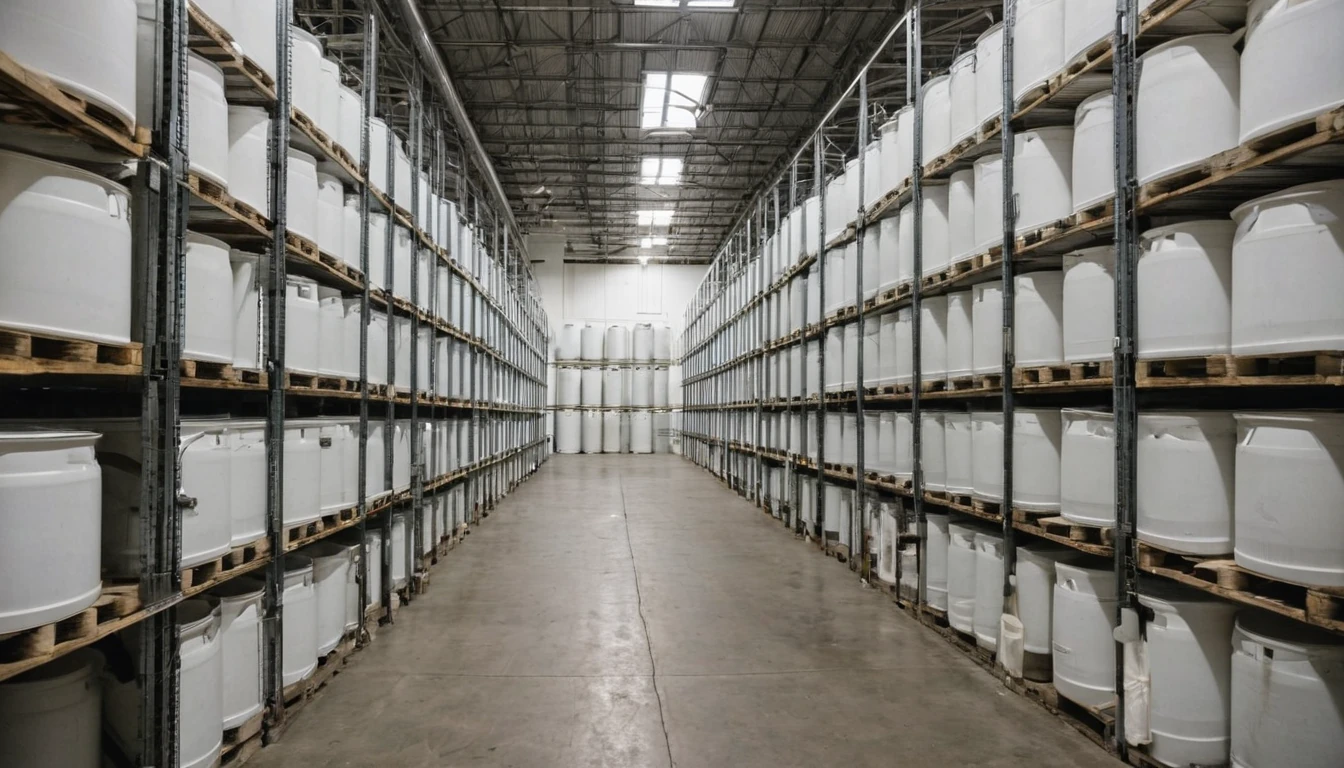
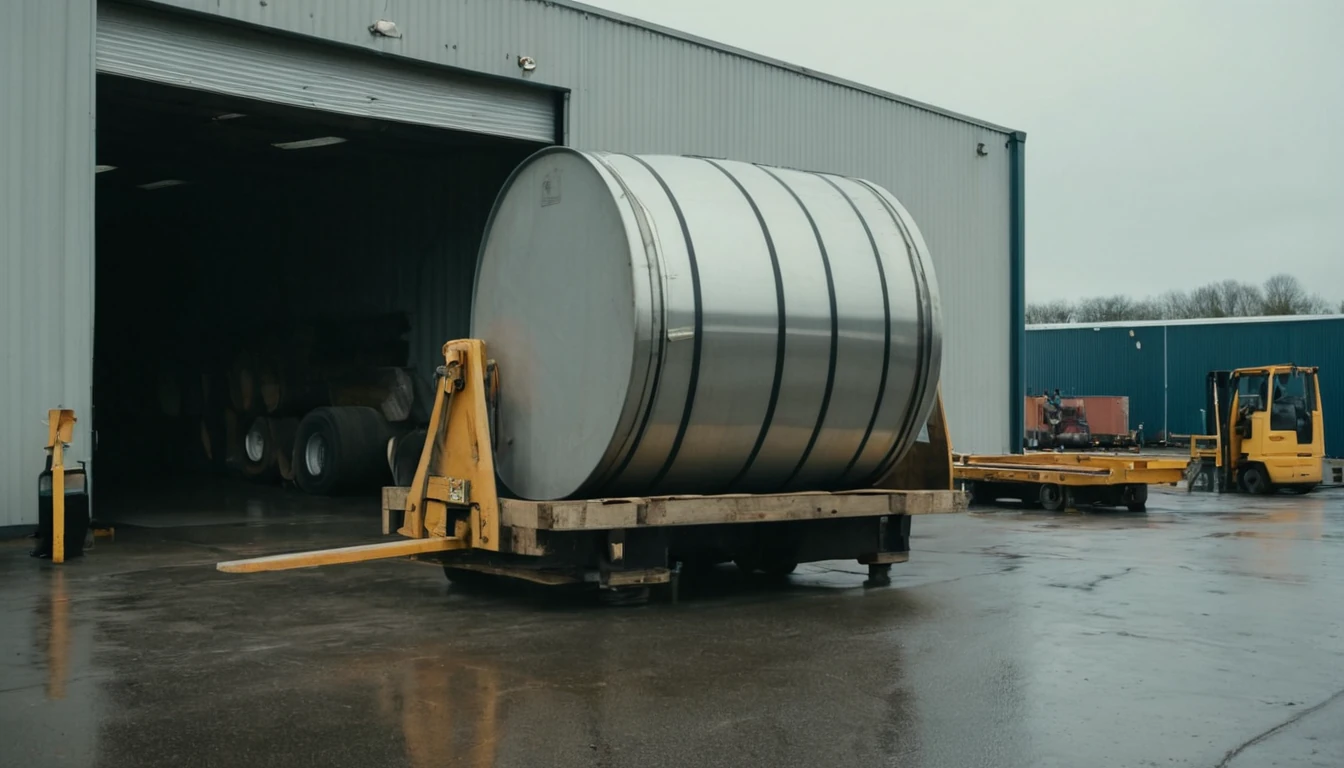
Bulk tankers give the lowest packaging cost per litre and the best volumetric efficiency, but they require dedicated compartments, documented cleaning records and vapour handling at the receiving point. IBCs suit smaller consumption rates and multi-site distribution, at a higher cost per litre and with the liner as an additional compatibility variable. Stainless steel tanks are the reference solution for storage at the point of use, where the capital cost is offset by protection of product quality across long hold times. Choose the format that matches your monthly consumption and your unloading capability, then confirm that the supplier's cleaning and inspection records match the format.
How should a procurement strategy handle documentation and traceability?
Documentation fails when it is not lot linked. A general conformity statement issued once a year cannot be tied to the tanker that arrived on Tuesday, and an auditor will ask exactly that question. Require the lot number on the certificate of analysis, on the delivery note and on the label, so that the three documents can be reconciled without a search.
Verifying the non-GMO corn stream per lot
Corn streams can be commingled during reception and storage, so the claim has to travel with the lot rather than with the supplier. We source corn from Türkiye and verify the non-GMO stream per lot with documentation, which is the level of granularity your own traceability file needs. Ask any supplier to describe the point in their intake process where the lot identity is created, and what happens to that identity if two deliveries are blended. If the answer is vague, the documentation is decorative.
Which standards should appear in your purchase specification?
A purchase specification should name limits and methods, not just grades. The table below shows typical windows and the reference documents that support them. Treat every value as indicative and confirm it against your own agreed specification and the applicable monograph before you sign.
| Parameter | Typical window | Verification method or reference |
|---|---|---|
| Ethanol content | 96.0% to 96.2% v/v at 20 °C for the ENA 96% grade | Alcoholic strength by volume, Ph. Eur. Ethanol (96 per cent) monograph |
| Water content | Consistent with declared strength, typically in the region of 7% to 9% w/w for 95% to 96% v/v grades | Karl Fischer titration, checked against the density based strength |
| Methanol | Grade dependent, commonly not more than 200 ppm per pharmacopoeial monographs, with tighter limits for food applications | Gas chromatography, FCC or USP ethanol monograph limits |
| Aldehydes (as acetaldehyde) | Typically not more than 10 ppm | Gas chromatography or colorimetric method |
| Higher alcohols (fusel oils) | Typically not more than 10 ppm | Gas chromatography |
| Acidity (as acetic acid) | Typically not more than 20 ppm | Titration |
| Non-volatile residue | Typically not more than 10 ppm | Evaporation to dryness |
| Odour and appearance | Clear, colourless, characteristic odour, free from foreign odour | Sensory assessment against a retained reference sample |
What does a practical extra neutral alcohol checklist look like?
Use the list below as the agenda for the next supplier conversation. It converts the five mistakes into questions with measurable answers, and it works whether you are qualifying a first supplier or reviewing an annual contract.
- Grade stated explicitly (neutral, denatured or technical) with the permitted end use confirmed in writing.
- Specification window with temperature basis and test method, not a nominal figure.
- Lot linked certificate of analysis matching the delivery note and label.
- Non-GMO documentation specific to the lot, with the intake point of lot identity described.
- Safety data sheet including denaturant identity and concentration where applicable.
- Container format confirmed against monthly consumption, with cleaning and inspection records available.
- Country of origin and market coverage stated, including Türkiye, Europe and the Middle East where relevant to your supply route.
- Complaint and rejection process defined, including who bears the cost of retesting.
- Technical contact named for specification queries before the first order, not after it.
A procurement strategy built on these points will not always produce the lowest headline price, but it produces a defensible total cost and a specification your quality team can support under audit. If you want to test the checklist against a real specification, our contact page is the right starting point, and the discussion is more useful when you bring the end use and the annual volume with you.
References and standards
- Ph. Eur. Ethanol (96 per cent) Monograph, European Pharmacopoeia: reference for strength, acidity and volatile impurity limits in a 96% grade.
- FCC Ethanol Monograph, Food Chemicals Codex: reference for food grade ethanol limits when the alcohol enters a food application.
- USP Ethanol Monograph, United States Pharmacopeia: reference for pharmacopoeial limits and test methods that many buyers adopt as a benchmark.
- Commission Regulation (EU) No 231/2012, E 1510 specifications: reference for the additive specification applicable in the European Union.
- Türk Gıda Kodeksi Gıda Katkı Maddeleri Yönetmeliği, E 1510 etanol: reference for the corresponding Turkish food additive specification.
- Regulation (EC) No 1907/2006 (REACH): reference for the registration and safety data sheet framework that governs documentation.
Need ENA 96% specs or pricing?
Our sales and technical team can share COA, specification sheets and export documentation.
Who prepared this article?
This content was prepared by the Agro Kimya technical team working across production, quality and export operations. Contact our team directly for product specifications, process details and supply conditions.
Editorial policy: Blog articles are prepared by the Agro Kimya technical team; product and process information reflects our plant operations. Certificates and laboratory results are shared only with current documents.